
French wine and food pairing tours are trips through the vineyards of France built around one idea: taste each regional dish beside the local wine that grew up with it. A day tour, a wine weekend or a full week of estate lunches, cheese tasting and cellar visits all follow that logic.
- Formats
- A day tour from a city, two days and one night with dinner at an estate, or a gourmet tour of a week or more across several wine regions.
- Core experiences
- Paired lunches in the cellar, cooking classes, market mornings, wine and cheese tasting led by the grower.
- Pairing logic
- Regional food with regional wine: goat cheese with Loire Sauvignon Blanc, choucroute with Alsace Riesling, Comté with Jura vin jaune.
What a French wine and food pairing tour actually includes
A French wine and food pairing tour combines wine tasting in working cellars with meals designed around the same wines. The difference from a standard wine tour lies in the table: instead of tasting five glasses on their own, you taste them with the dishes the region cooks every day. Most programmes mix three elements: a paired meal at a wine estate, a hands-on food activity such as a cooking class or a cheese tasting, and a guided cellar tour where the grower explains the grape varieties and how each wine behaves at the table.
Operators run these tours in two ways. Guided wine tours take a small group in a minibus with a driver and a guide who speaks your language, which removes any question about who drives after the meal. Private tours follow the same pattern for a couple or a family, with the duration and pace of each day chosen in advance. Independent travellers book estates one by one and plan the route themselves; the trade-offs are set out in detail when choosing between a guided wine tour and driving yourself. Both formats work, but the guided version usually gains access to estate kitchens and private tables that do not appear in any public calendar.
Paired lunches at the wine estate
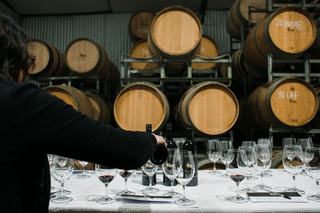
Paired lunches are the heart of most food and wine tours in France. Many estates have invested in kitchens or partner with a local chef. Some run full restaurants where the menu follows the estate's range, from a dry white with the starter to an older red with the main course. Others set a simple table in the barrel room: a few dishes, four or five wines and a winemaker who explains each pairing as the plates arrive. These tables seat few people and fill early, especially in summer.
Cooking classes and market mornings
Cooking classes have spread to estates across Burgundy, Provence and the Loire Valley. A typical morning starts at the local market, continues with a lesson in making a terrine, braising duck or preparing a tarte Tatin, and ends with lunch and the wines chosen to match. In Burgundy, Beaune holds a small food market on Wednesday at the Place de la Halle and a much larger Saturday market spreading from the covered halls into the surrounding squares, both good places to gather bread, cheese and charcuterie. In Provence, the morning market on Place Richelme in Aix-en-Provence plays the same role before a cooking class in the hills.
How to pair French wine with food the way the regions do
French wine pairing rests on a simple rule used by cooks across France: what grows together goes together. Each wine region developed its cuisine in dialogue with its wines over centuries, so the most reliable pairing guide is the map. A chilled Loire Sauvignon Blanc from Sancerre cuts through the richness of Crottin de Chavignol goat cheese made a few kilometres away. A Burgundy Pinot Noir softens the long-cooked sauce of a boeuf bourguignon. An Alsace Riesling, dry and sharp, balances the fat of a choucroute garnie.
Beyond geography, French pairings follow a handful of principles that a good tour guide will point out at the table:
- Acidity with fat: white wines with high acidity, such as Chenin Blanc from Vouvray or a white Burgundy from Chablis, cleanse the palate after rillettes, cream sauces or oysters.
- Tannin with protein: Cabernet Sauvignon and Merlot blends from Bordeaux suit grilled red meat and lamb, because protein softens their tannins.
- Sweet with salty: Sauternes with Roquefort or with foie gras is the classic example of sweetness balancing salt.
- Weight with weight: a light Cabernet Franc from Chinon with charcuterie, a full Châteauneuf-du-Pape with a daube or game.
- Bubbles with almost anything salty: Champagne and other sparkling wine, from crémant d'Alsace to crémant de Loire, work with gougères, fried food and soft cheeses.
The perfect pairing on a tour rarely comes from a rule, though. It comes from tasting a red wine with the cheese from the farm down the road and noticing how both change. That is the experience a wine and food pairing tour sells: understanding a pairing because you tasted it where it was born.
Organic, biodynamic and themed culinary tours
Organic and biodynamic wine tours form a growing niche within French culinary travel. Organic estates farm without synthetic pesticides or fertilisers and carry the EU organic label; biodynamic growers go further, following a planting calendar and preparations certified by bodies such as Demeter or Biodyvin. An organic wine tour often pairs those bottles with produce from organic farms nearby, so the whole table follows the same farming choice. The Loire Valley, Alsace and the Languedoc count many organic growers open to guests.
Themed tours offer another way to discover a wine region. Some operators combine wine with a French language workshop in the morning, others with painting or photography, an art and wine journey through the light of Provence or Burgundy. Culinary tours led by a chef add a cultural layer: you learn why a dish exists, which harvest or market tradition shaped it, before tasting it with its wine. These activities suit travellers who prefer one region in depth to a list of destinations ticked off at speed.
Which regions of France suit food and wine tours best?
Every wine region in France has a signature table, but some regions organise their food and wine tourism better than others. The regions below concentrate the most estate restaurants, cooking classes and gourmet tours.
Bordeaux, Saint-Émilion and the South West
Bordeaux pairs its Cabernet Sauvignon and Merlot red wines with entrecôte à la bordelaise, grilled over vine cuttings, and with Pauillac lamb. A day tour to Saint-Emilion often includes a meal in the medieval village and a tasting at a grand cru château. Further into the South West, the Périgord adds foie gras, duck confit and truffles, matched with Sauternes, Monbazillac or a Cahors Malbec.
Burgundy and the Rhône Valley
Burgundy offers the densest mix of grand cru vineyards and serious cooking: oeufs en meurette, jambon persillé and Époisses cheese with Pinot Noir from the Côte de Nuits, gougères with a white Burgundy. Lyon, the gourmet capital of France with its bouchons and Michelin-starred tables, is the gateway to the Rhône Valley, which continues south with Côte-Rôtie, then Châteauneuf-du-Pape, whose reds stand up to daube and game, and with Tavel rosé for summer tables.
Alsace, the Loire Valley and Champagne
Alsace runs its winstubs, traditional wine taverns serving tarte flambée, baeckeoffe and Munster cheese with Pinot Gris or Gewurztraminer, all along the Route des Vins; a stop in the villages of the Alsace Wine Route gives a whole wine route of taverns within a few kilometres. The Loire Valley pairs Chenin Blanc with rillettes, Sauvignon Blanc with goat cheese and Cabernet Franc with river fish and pork. Champagne serves Chaource cheese and the ham of Reims with its sparkling wine, and Reims sits about 45 minutes from Paris by high-speed train, which makes it the usual Paris wine day tour; Epernay and its Avenue de Champagne, lined with the great houses, complete the trip.
Provence and Languedoc-Roussillon
Provence pairs the bouillabaisse of Marseille with a mineral white from Cassis, lamb with red Bandol and nearly everything else with rosé; Aix-en-Provence makes a practical base for both, an hour from Marseille, and the winter truffle market of Richerenches adds a reason to travel out of season. Languedoc-Roussillon is the region for cassoulet with Corbières or Minervois, and for Banyuls, a fortified red served with chocolate desserts. Prices and crowds stay lower here than in Bordeaux or Burgundy, and many estates welcome guests without the long waiting lists of the famous names.
A typical itinerary: day tour, wine weekend or longer stay
A typical food and wine tour itinerary depends on the time available, and operators sell three main formats. The day tour leaves a city in the morning, includes two cellar tastings and one paired lunch, and returns in the late afternoon. The wine weekend, often sold as 2 days 1 night, adds a dinner at an estate or a gourmet restaurant and a night in a château, then a cooking class or market morning on the second day. Longer gourmet tours run five to nine days and move between two or three regions.
A two-day programme in Burgundy, for example, often looks like this:
- Day 1: market morning in Beaune, cooking class with lunch and paired wines, tasting at a Côte de Beaune estate, dinner with the winemaker.
- Day 2: guided wine walk through the grand cru vineyards of the Côte de Nuits, cheese tasting with Époisses and Comté, a final lunch before the return.
Seasons change the menu. Harvest in September and October brings activity to the cellars but leaves growers with little time for guests; many operators schedule departures in spring (Mar-Apr) and late autumn (Oct-Nov), when estates are calmer and the kitchens cook asparagus, then game, mushrooms and the first truffles.
Reading reviews and booking the right tour
Reviews of wine tours tell you more when you read them for specifics rather than stars. Look for mentions of group size, the number of estates per day, whether lunch was a real paired meal or a sandwich between tastings, and whether the guide spoke about the food as well as the wine. A tour in France that lists every estate by name usually delivers a better table than one that promises "several prestigious wineries".
Practical details matter as much as the menu when you choose between offers, and a quick email to the operator or customer support settles most of them before the visit:
- Age range: tastings are for adults of legal age; the sale of alcohol to under-18s is prohibited in France, so family tours replace tastings with grape juice or farm visits for children.
- Cancellation policy: small estates plan lunches for a fixed number of guests, so cancellation terms are often strict.
- Diet: vegetarian menus exist but must be requested when booking; traditional regional cuisine leans heavily on meat, butter and cheese.
- Gift box: many tours are sold as a gift box with a voucher valid for a year, which usually requires booking a date directly with the estate.
Small family estates rarely accept walk-ins at lunchtime. Independent travellers should read up on booking a French winery slot weeks in advance, because the best paired tables close their calendars long before summer.
Tasting, spitting and the drive back after a paired lunch
Wine tasting tours combine a long lunch with an afternoon of cellar tastings, and the glasses add up. In French cellars, spitting is normal etiquette, and growers expect it from anyone who drives; spittoons stand on every tasting counter. A paired lunch is the moment to drink a glass with the food rather than taste and spit, which is why many travellers plan the day around it: a designated driver, a local guide with a vehicle, or a hotel within walking distance of the restaurant.
The legal blood-alcohol threshold is low in France and lower still for probationary licence holders, so checking the French drink-driving limit and the roadside test rules before the trip avoids unpleasant surprises at a police checkpoint. On a guided tour, the question disappears: the driver stays sober and the group can enjoy every pairing, from the dry white with the starter to the sweet wine with the cheese, without thinking about the road.