A guided wine tour in France is a day where an operator drives you between wineries, books each tasting in advance and translates the cellar visit. It buys a first trip two things: access to vineyards that receive by appointment, and a guide who explains what the region has put in the glass.
Before you pick a format
- A guided wine tour suits Bordeaux, Burgundy and Champagne, where the wineries worth the trip open by appointment only and the tasting is a seated experience.
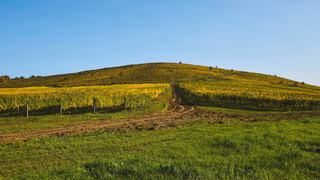
- Self-drive suits the Alsace wine route, the Loire valley and the south west, where cellar doors stay open to passing visitors and the vineyard itself is the attraction.
- Cost rarely decides it. A guided wine experience in Bordeaux, Burgundy or the Rhone valley is bought for access to the estate and for commentary in English, not for the transport.
- The real question is who drives home, and whether anyone in the group is willing to taste a grand cru and then spit it out.
What a guided wine tour in France actually covers
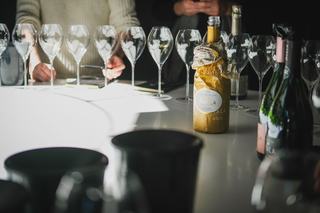
A guided wine tour is a packaged day: transport between estates, a slot booked in advance at each winery, and a tour guide who translates the cellar visit and runs the tasting commentary. Most operators leave from a city in the morning, stop at two or three wineries, and return in the late afternoon. The pattern is the same in Bordeaux, Burgundy and Champagne, and it is the format most first-time visitors book.
What changes from one operator to the next is the size of the group. A shared minibus carries eight to sixteen people along a fixed wine route. A private car takes one family or one couple and can spend two hours at a single wine estate instead of racing through three. Both are sold as a wine experience rather than as transport, and both usually absorb the tasting fees a French winery would otherwise charge at the door.
The guided format also solves something nobody warns you about. French estates close over lunch, often from noon to two, and the smaller ones receive only by appointment. An operator holds those slots months ahead. Arriving alone at a famous chateau without one usually means a closed gate and a wasted morning. Visitors who would rather arrange the day themselves will find the same ground covered in our guide to how appointments work at French estates.
How do you plan a guided wine tour?
Planning one is mostly a matter of fixing four things in order: the dates, the region, the language, and the small print. None of them takes long, and getting them wrong is what turns a promising day into a coach park with a tasting counter at the end.
Check dates against the working calendar of the vineyard
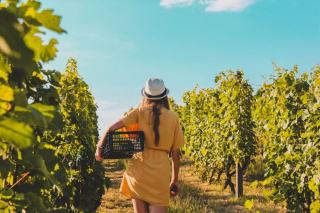
A wine region is a workplace before it is a destination. During the harvest, roughly from late August in the south to early October in northern France, many estates stop taking visitors or shorten the cellar tour. February and March are quiet, cold and cheap, and the tasting is often given by the owner rather than by staff. Late spring and September remain the two windows when the vineyard looks like the photographs and the winery still has time for you.
Read the terms and conditions, not just the itinerary
Operators publish their cancellation terms, their weather policy and their privacy policy on the same page as the booking form, and the conditions differ sharply between a shared minibus and a private guided tour. Look for what happens if one estate cancels at short notice, whether the tasting fees are included or collected on the day, and how customer support answers once you are in France. A contact number that works on a Sunday morning in the Medoc is worth more than a discount.
Confirm the tour actually runs in English
Most operators in Bordeaux and Burgundy run in English, and many in Champagne do too. Away from those three regions it is not a given. A bilingual tour guide splitting a small group between two languages halves the commentary, and a cellar visit given only in French leaves you watching other people nod. Ask which language the guide will use at the estate itself, since the winery staff, not the driver, often lead the tasting.
Guided tour or self-drive on a first trip
Both formats work. They simply fail in different places, and the honest comparison is not about cost but about what each one takes away from you.
| What it decides | Guided wine tour | Self-drive |
|---|---|---|
| Who drives | Nobody in the group, so everyone tastes | One person stays under the legal limit all day |
| Access to estates | Appointment-only chateaux and grand cru cellars open | Cellar doors on the wine trail, plus what you booked |
| Pace of the day | Fixed, two or three stops, back by evening | Yours, including the village lunch that overruns |
| Language | English throughout when you book it that way | Whatever the family owned estate can offer |
| Buying wine | Limited to what the vehicle and your flight allow | A boot, which is how most cases come home |
| Cost driver | Group size and private versus shared | Car hire, fuel and tasting fees paid one by one |
One line in that table does more work than the rest. France applies a lower blood alcohol ceiling than several neighbouring countries, and a stricter one again for drivers licensed less than three years, with roadside checks common on wine country roads at weekends. The rules and what they mean for a tasting day are set out in our page on the drink driving limit in France. If the group wants to taste properly at every stop, the guided day is not a luxury, it is the only version that works. If one person is happy to spit and drive, a self-drive route through the vineyards gives a longer, slower trip for the same money.
Which regions suit a guided day, and which do not
Bordeaux and Saint-Emilion
Bordeaux is the strongest case for a guided tour. The classified estates of the Medoc receive by appointment, the distances between them are real, and the city is an hour from most of them. A standard day trip pairs two chateaux in the Medoc, or one in the Medoc and one on the right bank at Saint-Emilion, where the medieval village adds a walking tour to the tasting. Sauternes makes a third option for anyone curious about sweet white wine. Saint-Emilion also sits on limestone, and more than one grand cru estate still ages its bottles in a cave cut under the village, where the temperature in that cave barely moves across the year. In the city, La Cite du Vin gives a cultural introduction to the region before you taste anything, and the restaurants around the covered market pour red wine from properties you can visit the same week. Our regional guide to Bordeaux vineyards and their appellations explains how the left and right banks differ before you choose a direction.
Burgundy and the Cote de Beaune
Burgundy inverts the problem. The villages of the Cote de Beaune sit within a few kilometres of each other, so the driving is trivial, but the estates are small, family owned and genuinely hard to reach without an introduction. A guided day here is bought for access, not for transport. The grands crus are the draw; the more interesting tasting is usually the village wine beside them, which is where a good tour guide earns the fee.
Champagne, close to Paris and to the north
Champagne is the easiest guided wine experience to slot into a city break. Reims and Epernay are around forty-five minutes from Paris by fast train, and a day tour collects you at the station. The great houses run polished cellar visits in English on a timetable; the growers in the surrounding villages give the more personal one. This is the northern edge of French wine culture, and the chalk galleries under Reims are worth the journey on their own. The avenue de Champagne in Epernay, located directly above kilometres of them, is a short walk from the station, and a night in the town lets you enjoy a late tasting without a return train to Paris to catch.
Rhone valley, Beaujolais and the south
From Lyon, both the Rhone valley and Beaujolais are within a short drive, and both reward a guided day for the same reason as Burgundy: the best producers are small. Further south, Provence wine and the villages around Aix en Provence combine a vineyard visit with a long lunch, while Languedoc Roussillon and the south west are better done by car, where a cellar door every few kilometres is the whole point. Alsace wine and the Loire valley follow the same logic, with a marked wine route you can stop along at will. Chateauneuf-du-Pape lies half an hour from Avignon and is one of the most requested destinations of the southern Rhone; the pape in its name is the medieval papal court that made the village famous. Marseille and Aix en Provence both work as a base for tasting white and rose near the coast, in April as comfortably as in July.
Guided formats beyond the minibus
A guided wine tour does not have to mean a seat in a vehicle. Operators sign up estates for blending workshops where you assemble your own bottle at a domaine, tasting classes led by a local expert in a wine bar, and vineyard walks that explore a single slope on foot. A bike tour covers the flat vineyards of the Medoc or the Loire without a car at all, and a river cruise turns the Rhone or the Garonne into the journey itself, with a domaine visit at every mooring. Each of these is a different wine experience, not a cheaper version of the same one.
These formats also suit a mixed group better. A cruise along the river or a bike route gives children something to do while the adults taste, and a gourmet dinner at a domaine with its own restaurant works when the holiday is about food as much as about wine. Reviews are the practical filter here: a workshop that a dozen adult visitors call unique is usually run by the grower rather than by a booking desk. Ask whether the domaine is organic or farms sustainable vineyards if that matters to you, whether the AOC on the label is the one you travelled for, and whether the price covers the tasting or stops at the door. French wine tourism has moved well beyond the coach, and a cultural morning at the heart of a producing village can offer more than a second cruise past the same vines.
What shapes the cost of a guided day
Prices move with a handful of variables rather than with the quality of the wine. Group size matters most: a shared minibus divides the driver and the vehicle among a dozen people, while a private car carries the same cost for two. A half day sits well below a full day, and a full day with a gourmet dinner or a cheese tasting sits well above it. Peak season, harvest weeks and Saturdays push everything to the upper end of the range; February pulls it to the bottom.
Two extras are worth checking before you compare offers. Some operators include the tasting fees at each winery and some do not, which can change the real total by a third. And the prestige of the estates changes the figure more than the number of stops does: a day with one classified growth costs more than a day with three cooperatives, whatever the itinerary implies. If the budget is tight, a morning tour plus an afternoon spent in the city on foot usually beats a stretched full day.
Questions first-time visitors ask
What is included in a guided wine tour in France?
Transport from a fixed meeting point, the booked visits at two or three estates, a guided cellar tour and the tasting at each stop. Lunch is included on full-day tours more often than not, and tasting fees usually are, though the listing should say so explicitly rather than leave it implied.
How far ahead should you book a wine tour?
Two to three months for a spring or September Saturday in Bordeaux, Burgundy or Champagne, where small groups fill early. A week can be enough in winter. Private tours and any date during the harvest need the longest lead time, since the estates themselves limit how many visitors they accept.
Can you visit a French winery without a guide?
Yes, and in Alsace, the Loire valley and the south west it is the normal way to discover a region. What you lose is access to the estates that never open a cellar door to passing traffic, and the freedom for everyone in the car to finish a glass.
Is one day enough to discover a wine region?
One day covers a region's reputation. Two or three, with a stay among the vines rather than in the nearest city, covers the region itself, and lets you match the food to the wine in the evening instead of driving back at dusk.