
Wine museums in France are cultural venues that tell the story of vine and wine through exhibits and old cellars, then pour a tasting. Bordeaux leads with the Cité du Vin and its wine and trade museum, where mediators pour Bordeaux wines; Paris keeps a wine museum in monastic cellars near the Eiffel Tower.
- Bordeaux
- Two museums a tram ride apart: the Cité du Vin for world wine culture, the museum on rue Borie for the Bordeaux wine trade; both pour a glass at the end of the tasting tour.
- Paris
- The Paris wine museum, 5 square Charles Dickens 75016, fills wine cellars once used by the Minim friars of Passy and runs tasting courses.
- Regions
- Beaune, Chablis, Mâcon, Épernay and Châteauneuf-du-Pape each have a wine museum to discover local cellar heritage before a tasting at the estates.
Which wine museums in France deserve a place in your trip?
The best wine museums in France fall into two families: large interpretation centres built to explain wine culture to a wide public, and smaller heritage museums set in historic wine cellars, merchant houses or monasteries. Both work as a first stop before tasting at estates, because they give the vocabulary of vine and wine (appellation, terroir, blending, ageing) that winemakers use without explaining it.
The table compares the main venues by what they cover and whether a glass of wine is part of the standard visit. Opening hours change with the season, so treat it as a planning grid and confirm days on each official site before travelling.
| Museum | City | Main subject | Tasting |
|---|---|---|---|
| Cité du Vin | Bordeaux | Wine in world history and every wine country | Glass at the belvedere with the permanent tour |
| Musée du vin et du négoce | Bordeaux (Chartrons) | The port, the merchants and Bordeaux wines | Guided tasting at the end of the visit |
| Le M. Musée du Vin | Paris 16th | Objects of French wine heritage in vaulted cellars | Tasting courses booked separately |
| Cité des Climats et vins de Bourgogne | Beaune, Chablis, Mâcon | The Burgundy climats and their soils | Depends on the site and the formula |
| Musée du vin de Champagne et d'archéologie régionale | Épernay | Champagne making and regional archaeology | Not the core of the visit |
Cité du Vin in Bordeaux: a cultural facility about wine across the world
The Cité du Vin is the largest wine museum in Bordeaux and in France, a cultural facility opened in 2016 in a curved building on the Garonne, in the Bacalan district north of the city centre. It does not promote one region: its permanent exhibition places wine in human history, from early vineyards in the Caucasus and the Mediterranean to modern wine countries on every continent, with Bordeaux as one chapter among many.
The permanent exhibition and its interactive exhibits
The permanent exhibition of the Cité du Vin works through interactive exhibits rather than glass cases: projections, audio guides in several languages, scent stations and tables that let visitors discover how soil, climate and grape shape a style. The tour is self-guided, and most visitors spend two to three hours on it. The immersive experience suits people with no wine knowledge as well as enthusiasts, since every theme has a short and a deeper layer.
The belvedere and the tasting workshops
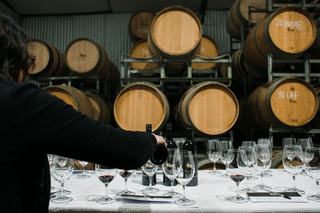
At the top of the building, the belvedere offers a view over Bordeaux and the river, and the permanent tour ticket includes a glass of wine there, chosen from a list of wines from around the world. Staff pour a measured serving and can suggest a grape juice instead. The Cité du Vin also runs tasting workshops, including Via Sensoria, a sensory tasting journey, and introductions to wine tasting in several languages; these are booked as separate sessions.
The Bordeaux wine and trade museum in the Chartrons
The Bordeaux wine and trade museum (Musée du vin et du négoce de Bordeaux) sits at 41 rue Borie, in a typical 18th century merchant house of the Chartrons quarter, the district where Bordeaux traders stored and shipped wine along the quays. Where the Cité du Vin looks at the whole world, this Bordeaux wine museum tells a local story: the port, the négociant families, the barrels and the export routes that made Bordeaux wines known in northern Europe.
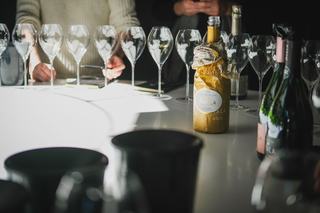
The visit of the Bordeaux wine and trade museum ends with a tasting led by one of its mediators, who explains how to read a Bordeaux label and what separates the left bank from the right bank. According to the museum's own site (checked in October 2026), it opens every day from 10:00 to 18:00. Pairing it with the Cité du Vin on the same day works well, as both stand on the north side of the city and the walk along the quays takes about twenty minutes.
The Paris wine museum under the Passy hill
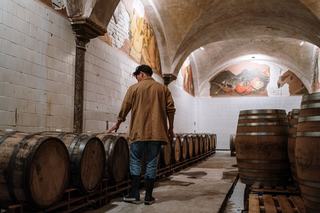
The Paris wine museum, now called Le M. Musée du Vin, occupies more than 1,000 m² of vaulted cellars at 5 square Charles Dickens 75016 Paris, a short walk from the Eiffel Tower. According to the museum, the Minim friars of the Passy monastery stored their wine in these cellars from the 16th to the 18th century, before the French Revolution closed the order and left the galleries empty.
From abandoned cellars to the Conseil des Échansons de France
The Passy wine cellars came back to life after 1950 and supplied the restaurant of the Eiffel Tower before becoming a museum in 1984, created by the Conseil des Échansons de France, a wine brotherhood whose stated aim is to defend and promote French wine. The collection gathers more than 2,000 objects: tools, glasses, bottles and documents that trace French wine culture from the Middle Ages to the 19th century.
Tasting courses and the restaurant
The Paris wine museum offers tasting courses for beginners and for experienced amateurs, booked in advance, and a restaurant serves regional French cooking in the cellars. Opening days are not stated clearly on the official site, so a phone call or online booking before the visit avoids finding the door closed. For a longer learning path, the formats of wine tasting courses from beginner to WSET level are compared region by region.
Burgundy, Champagne and the Rhône: regional wine museums
Regional wine museums in France are smaller than the Bordeaux venues but closer to the vineyards they describe. In Burgundy, the Cité des Climats et vins de Bourgogne opened in 2023 on three sites, Beaune, Chablis and Mâcon, each explaining the climats, the small mapped plots that define Burgundy appellations. Beaune also has the Musée du Vin de Bourgogne in the former residence of the Dukes of Burgundy; its opening has been seasonal with temporary closures, so check with the Beaune tourist office.
In Champagne, Épernay's museum of Champagne wine and regional archaeology, housed in the Château Perrier on the avenue de Champagne, covers the méthode champenoise, the cellar work of riddling and disgorging, and local archaeological finds. In the Rhône valley, the Brotte wine museum in Châteauneuf-du-Pape shows old winemaking tools and the history of a papal vineyard. These stops fit naturally into a guided wine tour or a self-drive itinerary, since they sit in the heart of the wine villages.
How wine museums grew from monastic cellars to interactive exhibits
The history of wine museums in France follows the history of wine itself. In the Middle Ages, monasteries such as the Minim friars of Passy or the Cistercians of Burgundy kept the main wine cellars and the knowledge of vine growing. After the French Revolution sold Church property, those cellars passed to merchants or fell empty, and the 19th century turned wine into a trade organised by négociants in Bordeaux, Beaune and Reims.
The first wine museums in France appeared in the 20th century, often founded by a wine brotherhood or a merchant family keen to preserve tools that mechanisation was making obsolete. The Paris museum of 1984 belongs to that generation. The Cité du Vin of 2016 marked a change: a cultural facility built from scratch, funded largely by public bodies and patrons, with interactive exhibits and no single producer behind it. Recent openings in Burgundy and Champagne follow the same model, linking heritage, landscape and the art of living around wine.
Modern wine museums also changed the visitor experience. Where older collections displayed presses and barrels with a short label, current venues let visitors explore a terroir through maps, sound and smell, and a guided tasting at the end shows how the theory translates into the glass. Mediators pour two or three wines side by side so that the difference between a young and an aged wine, or between two soils, becomes something to taste rather than read. For travellers short on time, this format condenses what several estate visits would teach into a single morning, which is why many wine tour operators now start their itineraries at a museum before heading to the vineyards.
A Bordeaux day built around two museums and the vineyards
A Bordeaux wine day can start at the Cité du Vin when it opens, continue with lunch in the Chartrons, and end with the Bordeaux wine and trade museum in the afternoon, where the tasting closes the visit. The next morning, the vineyards are less than an hour away: the Médoc to the north, Saint-Émilion to the east, the Graves and Sauternes to the south. Knowing which Bordeaux bank and appellation to visit first helps after the museum has explained the difference between Cabernet and Merlot country.
Bordeaux museums also prepare for estate visits in a practical way. Many châteaux in the Médoc require a booking and keep a formal tour, while family estates in the Côtes de Bordeaux open more freely. Visitors who learn the basics of Bordeaux blends at the Cité du Vin ask better questions in a château cellar, and they recognise the classification of 1855 when a guide mentions it. Drivers should keep in mind that the French blood alcohol limit is lower than in some countries, so spitting at tastings or using a guided tour keeps the day safe.
Opening hours, booking and access
Opening hours for wine museums in France vary more than for art museums, because several regional sites close in winter or on Mondays. The Cité du Vin publishes its access and opening hours online and recommends booking at weekends and during school holidays; the Bordeaux wine and trade museum states daily opening from 10:00 to 18:00; the Paris wine museum works mainly on booking for tasting courses and events. Smaller museums in wine villages rarely require a reservation, but their days change from one season to the next.
Access is easy for the city venues: the Cité du Vin is served by tram line B in Bordeaux, the Chartrons museum is a short walk from the same line, and the Passy cellars are close to the Passy and Trocadéro metro stations in Paris. Most permanent exhibitions are on the ground floor or served by lifts, though historic wine cellars can involve steps; the Paris museum's vaulted galleries are underground. Wine bought in the museum shops follows the same customs allowances as any French wine taken home.
Wine museum visits with children, non-drinkers and wine to take home
Can children visit wine museums in France?
Children can visit most wine museums in France, and the Cité du Vin designs family activities and interactive exhibits that hold their attention. The legal age to buy or be served alcohol in France is 18, so tastings stay reserved for adults and younger visitors receive grape juice.
Is a wine museum worth it for someone who does not drink?
A wine museum is worth it without drinking, because the exhibitions focus on history, geography, craft and trade. The glass included at the Cité du Vin and at the Bordeaux wine and trade museum is an option, and staff pour a soft drink on request.
Can you buy and ship wine from a museum shop?
Museum shops in Bordeaux and Paris sell bottles, and several ship abroad. Travellers carrying wine in their luggage should check the customs allowances for wine bought in France before buying, since limits differ for the EU, the UK and the United States.