The Normandy cider route is a signposted 40 km loop through the Pays d'Auge, east of Caen, linking Cambremer, the village of Beuvron-en-Auge and about twenty cider producers who open their farm cellars for tasting. On this Normandy route du cidre, apple cider, pommeau and Calvados apple brandy replace wine, and the Cru de Cambremer sign marks each cider producer. A one-day itinerary covers the cider route; a slow road trip of two days lets you explore each picturesque village and taste the Calvados heritage of Normandy properly.
What is the Normandy cider route?
The Route du Cidre is a marked cider route in the Pays d'Auge, the apple country of the Calvados department in Normandy, between Caen, Lisieux and Cabourg. Apple signs mark the route through Cambremer and Beuvron, and each cider producer in the scheme hangs a "Cru de Cambremer" panel at the gate. When the panel shows, the cellar is open: visit, taste the cider, the pommeau and the Calvados, and buy local products straight from the traditional farm producers of this picturesque region of France.
The cider route in Normandy was created by local producers who wanted travellers to discover the farms rather than only the big brands. It passes through a handful of villages: Cambremer, Beuvron-en-Auge, Bonnebosq, Beaufour-Druval, Rumesnil, Victot-Pontfol, Montreuil-en-Auge, Gerrots and Saint-Ouen-le-Pin among them. The roads are narrow, lined with hedges, apple trees and half-timbered manor house farms, and they rarely carry heavy traffic outside summer weekends.
For a visitor coming from the wine regions of France, the logic is familiar. A tasting room, a producer who explains the soil and the fruit, a cellar where the barrels age, and a bottle to take home. The difference is the raw material: here the region grows cider apples, not grapes, and the drink that plays the role of a great wine is Calvados, the apple brandy that ages for years in oak casks.
Cider, pommeau and Calvados: what you taste along the route
Three products carry a protected designation in the Pays d'Auge, and most farms on the route make all three. Knowing the difference before you arrive makes each tasting more useful.
- Cidre Pays d'Auge AOP. A naturally sparkling apple cider made from a blend of bitter, bittersweet, sweet and acidic apple varieties. The alcohol content usually sits between about 4 and 5.5 %. Producers offer it as doux (sweeter, lower in alcohol), demi-sec or brut (drier). The Cru de Cambremer label adds a local selection on top of the appellation.
- Pommeau de Normandie. A blend of fresh apple juice and young Calvados, aged in oak. Sweet, amber and around 17 % alcohol, it is the traditional aperitif of a Norman family meal and pairs well with melon or foie gras.
- Calvados Pays d'Auge. The prestigious version of Calvados, made by double distillation in a copper pot still, like a Cognac, then aged in oak for at least two years. Older bottlings carry age statements or labels such as VSOP and XO. At 40 % alcohol or more, it is a drink to sip slowly.
Many producers also sell poiré (perry, made from pears), apple juice, cider vinegar and local products such as jams or caramel. Sparkling apple wine is a phrase you may see on English labels; in practice it is simply cider. Some estates also offer a "trou normand", a small glass of Calvados served in the middle of a long meal, sometimes over apple sorbet.
For a wine lover, the vocabulary is easy to transfer. A good cider has a nose, a balance between sweetness and bitterness, tannins that come from the bittersweet apple varieties, and a length on the palate. A good Calvados shows fruit when young and notes of vanilla, dried fruit and wood with age, much like a fine brandy. Ask producers to pour two ages side by side: the comparison teaches more than any label.
Cambremer: the heart of the Pays d'Auge cider route
Cambremer is the capital of the route and the best place to start. The village gave its name to the Cru de Cambremer label, and its tourist office stocks the map of the circuit with the list of member farms. On market mornings the square fills with local products, and the village sits on a ridge with views over the Dives valley.
Several of the best-known producers sit around Cambremer. Calvados Pierre Huet, a family estate whose manor house has welcomed visitors for decades, is a classic first stop: the cellar tour explains the whole cycle, from the orchard to the still and the old casks. Other farms, smaller and less polished, show the same work in a more rustic setting. It is worth combining one established house with one or two family farms to understand the range.
Every year in spring, Cambremer hosts a festival dedicated to the AOP products of the region, with cider, pommeau, Calvados and cheese stands, demonstrations and a busy market. Check the date with the local tourist office before you plan: the event draws a crowd and the roads around the village get busy.
Beuvron-en-Auge and the other villages of the route
Beuvron-en-Auge is the village most visitors photograph. Classified among the most beautiful villages of France, it is built around a square of colourful half-timbered houses, with an old manor, cafés, antique shops and a few restaurants serving Norman food. The village of Beuvron is small enough to walk in an hour, and it makes a good lunch stop in the middle of the loop.
At the end of October, Beuvron-en-Auge celebrates its cider festival, one of the favorite autumn events in the region. The harvest is in, the presses are running, and producers come to the square to share fresh juice and new cider. It is also the best time to see apple orchards heavy with fruit and cider houses at full activity.
Bonnebosq, to the east, is quieter, with farms scattered along the roads and a beautiful manor. Beaufour-Druval and Victot-Pontfol offer some of the most picturesque stretches of the country roads, where the route climbs above the valley and the orchards alternate with meadows and stud farms. Crèvecœur-en-Auge, just off the loop, adds a restored medieval castle set by a moat. Each village has a different character, and taking the time to stop is the whole point of the journey.
Planning your Normandy cider route itinerary
A good Normandy cider route itinerary starts from Cambremer and turns clockwise, but any itinerary works because the loop has no fixed beginning. The loop is short on paper and slow in practice. Forty kilometres can be driven in an hour, but with three or four tastings, a lunch and a walk in Beuvron-en-Auge, a full day is the right format. Two days let you add Pont-l'Évêque, Honfleur or the coast to the itinerary. The distance between farms is short, so an itinerary is less about kilometres than about how many tastings you can enjoy in the countryside without rushing.
A one-day itinerary
- Morning in Cambremer. Pick up the map, visit a first producer (the cellar tour is often longer in the morning, when the farm is calm), and buy cheese at the market if it is on.
- Late morning on the western roads. Drive towards Victot-Pontfol and Beuvron-en-Auge, stopping at a second farm for a cider and pommeau tasting.
- Lunch in Beuvron-en-Auge. Take the time to walk through the village and its houses.
- Afternoon towards Bonnebosq. Visit a third producer, ideally one where you can compare young and old Calvados.
- Back to Cambremer or on to the coast. Cabourg and the sea are under 30 minutes away for an evening on the promenade.
How far is the route from Paris and Caen?
The circuit starts about 30 km east of Caen and around 2 h 30 to 3 hours from Paris by car. Trains from Paris Saint-Lazare reach Lisieux and Caen, but the route itself has no public transport worth relying on: you need a car, a bike or a guided tour. If you already know the day trips from Paris to the vineyards, count this one as a longer outing, better done with a night on site.
When to visit
Spring is the time of apple blossom, usually from late April to mid May, when the orchards turn white and pink. Summer brings the longest opening hours at the farms. Autumn is harvest time and the season of the cider festival in Beuvron. Winter is quiet: many producers stay open, but it is wise to call ahead. Most farms close on Sundays out of season.
What activities are available on the cider route?
Tasting is the core of the experience, but the Pays d'Auge offers more than cellars. The region has a strong horse culture, and stud farms raise thoroughbreds on its meadows; some of them organise visits. Horse riding is an option for experienced riders, with riding centres around Cambremer and Bonnebosq that propose rides through the country lanes. For families, a morning of riding followed by a farm visit keeps children busy. Horse riding on the bucolic lanes of the Pays d'Auge, between fields and orchards, is one of the most typical ways to feel the rural life of Normandy, and a riding centre can add a pony ride for younger children to the itinerary.
Cycling is the other natural way to explore the route. The hills are gentle but real, and an electric bike makes the circuit accessible to most travellers; several hire points in the area offer e-bikes by the day. If you ride, the question of alcohol becomes simpler: spitting at tastings is accepted, and shipping bottles home saves carrying them. Our page on cycling tours through French vineyards gives practical advice that applies here too.
Other activities nearby include golf courses on the coast near Cabourg and Houlgate, walking trails through the orchards, cheese farms producing Pont-l'Évêque and Livarot, and the Memorial de Caen, the museum dedicated to the history of the twentieth century and the Battle of Normandy. Combining the cider route with the D-Day beaches is common for travellers who stay several days in the region, and the Memorial makes a strong contrast with the gourmet side of the itinerary.
Choosing producers and making the most of a farm visit
The cider producers on the route range from family farms selling a few thousand bottles at the door to estates that export their Calvados. There is no single best address; the right choice depends on what you want to see. A few principles help.
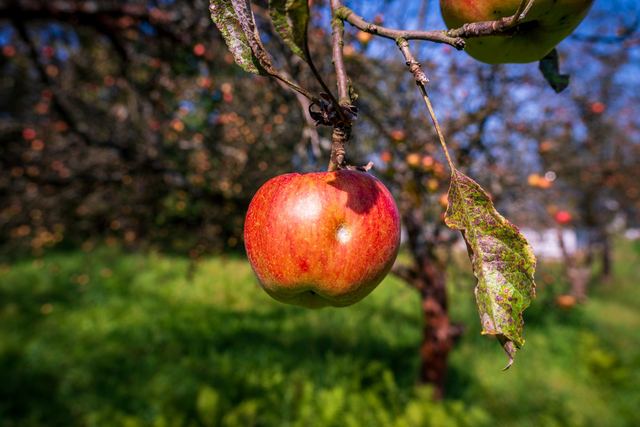
Visit at least one farm that still presses and ferments on site, so you can see the press, the vats and the ageing cellar. Ask about the apple varieties: producers grow dozens of old varieties with evocative Norman names, and they enjoy explaining why a blend needs bitter and acidic fruit. Ask whether the orchards are high-stem trees grazed by cows, the traditional Pays d'Auge model, or low-stem orchards.
Some names come up often among travellers and guides: Pierre Huet near Cambremer, the Antoine Marois farm, Michel Vermughen at Beaufour-Druval, and others marked on the official map. At the other end of the scale, Père Magloire, one of the large Calvados houses, runs a visitor centre in Pont-l'Évêque with an immersive tour, useful on a rainy day or for a first introduction. Larger houses offer structured visits with tickets; small farms usually offer a free, informal tasting in the hope you buy a bottle.
Tasting etiquette is close to what you know from a winery visit. Arrive during opening hours, taste in moderation, buy if you enjoyed it, and do not expect a small farm to handle a group without warning. The way French estates handle tasting fees gives a good idea of what to expect at the larger houses.
Food along the route: cheese, apples and Norman cooking
The Pays d'Auge is also a cheese country. Pont-l'Évêque, Livarot and Camembert all come from within a short drive of the route, and each farm or market will offer at least one of them. Cider and cheese pair naturally: a dry cider with a young Pont-l'Évêque, a pommeau with an aged Livarot.
Traditional Norman food uses the local products generously: cream, butter, apples, cider and Calvados in sauces. Look for chicken or pork cooked with cider and cream, tripe à la mode de Caen, apple tart and teurgoule, a slow-baked rice pudding with cinnamon. Local butter cookies, the famous sablés, make an easy gift to take home. The tit normand, a small glass of apple spirit, sometimes closes the meal.
Restaurants in Beuvron-en-Auge and Cambremer are small and fill quickly on weekends. Book lunch ahead in high season, or plan a picnic with bread, cheese and a bottle of cider bought on the way.
Where to stay on the cider route
Staying one night changes the experience. Many farms rent rooms or gîtes in restored half-timbered houses, and a few manor houses operate as guest houses with a garden set among apple trees. These stays offer calm, privacy and breakfast with farm products. Hotels are more numerous on the coast, in Cabourg and Houlgate, or in the larger towns of Lisieux and Caen.
For travellers used to sleeping at a wine estate, the farm stay is the closest equivalent here. Book early for May and October, when blossom and the festivals draw visitors.
Driving, drinking and bringing bottles home
The cider route is a driving route, and French law is strict. The legal limit is 0.5 g of alcohol per litre of blood, lowered to 0.2 g for drivers with a probationary licence. A few glasses of cider plus a taste of Calvados can reach the limit faster than people expect, because the brandy is strong. Share the driving, spit when tasting spirits, or join a guided tour. The rules are explained in detail on our page about the drink driving limit in France.
Bottles travel well. Cider is sparkling and needs care in hot cars; Calvados and pommeau are easy to carry. Within the EU, personal quantities cross borders freely; for other countries, check allowances before you buy, as explained in our guide on bringing wine home from France, which applies to spirits as well.
Why a wine traveller should follow the cider route
France is known for its wine, and most wine tourism routes follow the vineyards of Bordeaux, Burgundy or Champagne. The northern France cider country offers a different journey: no vines, but a landscape of orchards, stud farms and timbered houses where the heritage of the apple goes back centuries. The producers are often the same families who have farmed the land for generations, and the welcome is informal.
For a traveller who already knows the wine regions, the Pays d'Auge cider route is a way to explore another side of French food and drink culture, taste a brandy that rivals Cognac, and discover a region that remains quiet even in summer. Set aside a day, a car or a bike, and let the Cru de Cambremer signs lead the way.