
A French wine route road trip links signposted roads through the great regions of France: the Alsace route, Burgundy's Route des Grands Crus and the Champagne loops let you explore villages, visit cellars and travel between them at your own pace.
- Easiest first trip in France: the Alsace wine route, about 170 km from Marlenheim to Thann, with picturesque villages a few minutes apart and a unique heritage.
- Rhythm that works: one region for a long weekend, two or three regions in a week, a full loop of the country in three to four weeks.
- Whoever drives spits at every tasting: the legal limit is 0.5 g of alcohol per litre of blood, and 0.2 g on a probationary licence.
Which wine routes in France suit a road trip?
France's wine routes are signposted tourist roads that link wine-growing villages, estates and cellars inside one appellation area. Most were created by regional wine councils in the twentieth century, and brown road signs reading "Route des Vins" or "Route des Grands Crus" mark them on the ground. They differ in length, landscape and the style of wine you meet along the way, so the right road depends on how much time you have and which grape varieties you want to taste.
The table compares the six routes that work best by car, with the town that makes the most practical overnight stop on each.
| Route | Start and end | Main wines | Overnight hub |
|---|---|---|---|
| Alsace wine route | Marlenheim to Thann, about 170 km | Riesling, gewurztraminer, pinot gris, white wine above all | Colmar or Riquewihr |
| Burgundy wine route (Route des Grands Crus) | Dijon to Santenay, about 60 km | Pinot noir, chardonnay | Beaune |
| Champagne tourist route | Several loops around Reims, Épernay and the Côte des Bar | Sparkling wine from chardonnay, pinot noir, meunier | Épernay |
| Bordeaux: Médoc and Saint-Emilion | D2 along the Gironde estuary, then east to the Libournais | Cabernet sauvignon, merlot, sweet Sauternes | Pauillac or Saint-Emilion |
| Loire Valley wine route | Nantes to Sancerre along the river | Muscadet, chenin blanc, cabernet franc, sauvignon blanc | Saumur or Chinon |
| Rhône, Provence and Languedoc | Vienne to Avignon, then west to Narbonne | Syrah, grenache, Provence wine rosé | Tain-l'Hermitage or Avignon |
Alsace: half-timbered houses and a wine trail between the Vosges and the Rhine
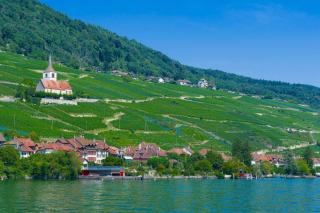
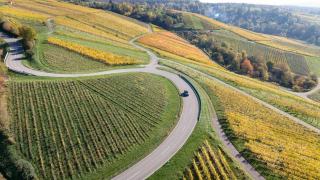
The Alsace wine route opened in 1953 and remains the most famous self-drive itinerary in France. It runs along the foothills of the Vosges through more than a hundred wine villages, and the distances between them are short: Riquewihr, Kaysersberg, Ribeauvillé and Eguisheim sit within a half-hour drive of Colmar. The Alsace wine region counts 51 grand cru sites, and Alsatian estates label their bottles by grape, which makes tasting easy for first-time visitors. The timbered houses, stork nests and flower boxes explain why the route draws crowds in summer and during the December Christmas market season. Planning the stops in detail, from the northern villages to the southern end at Thann, is covered in our itinerary for driving the Alsace route from Marlenheim to Thann.
Burgundy: the Route des Grands Crus and the Clos de Vougeot
The Burgundy wine route, known locally as the Route des Grands Crus, was laid out in 1937 and follows the Côte de Nuits and the Côte de Beaune south from Dijon. This historic road is a beautiful drive through the heart of Bourgogne, and village names on the signs read like a wine list: Gevrey-Chambertin, Vosne-Romanée, Meursault, Puligny-Montrachet. The Château du Clos de Vougeot, a Cistercian estate in the middle of the vines, hosts the Confrérie des Chevaliers du Tastevin and opens to visitors most of the year. UNESCO listed the Climats, the small named vineyard plots of Burgundy, as World Heritage in 2015. Beaune makes the natural overnight stop, with its Hospices and dozens of cellars within walking distance.
Champagne: houses in Reims and Épernay, growers in the villages
The Champagne tourist route is a set of signposted loops through the Montagne de Reims, the Vallée de la Marne, the Côte des Blancs and the Côte des Bar near Troyes. The big champagne houses in Reims and along the Avenue de Champagne in Épernay offer cellar tours with a guided visit of their chalk galleries, while small growers in villages such as Hautvillers or Le Mesnil-sur-Oger receive visitors by appointment. The Champagne hillsides and chalk galleries joined the UNESCO World Heritage list in 2015. Épernay is under two hours' drive east of Paris, which makes Champagne wine the easiest region to add to a city stay.
Bordeaux, the Loire and the south
Bordeaux wine country is less a single road than a cluster of appellations. The D2 through the Médoc passes Margaux and Pauillac, and Saint-Emilion, a medieval town listed by UNESCO in 1999, sits an hour east across the Dordogne. The Loire Valley wine road follows the river from the Muscadet vineyards near Nantes to Sancerre, past the châteaux of Touraine; UNESCO listed the valley between Sully-sur-Loire and Chalonnes in 2000. Lower down the map, the Rhône links Côte-Rôtie, Hermitage and Châteauneuf-du-Pape, Provence wine estates line the roads between Bandol and Sainte-Victoire, and Languedoc-Roussillon, the largest wine-producing area of France by vineyard surface, offers quieter roads and lower visitor numbers.
How long should a wine road trip last?
A wine road trip in France needs more time than the driving distances suggest, because cellar visits, lunches and village walks fill the day. Two or three estate visits per day is a comfortable rhythm: more than that and tastings start to blur, and the person at the wheel spends the afternoon spitting. The length of the trip then depends on how many regions you want to cross.
| Time available | Realistic scope | Example |
|---|---|---|
| Long weekend | One route, one hub | Alsace from Colmar, or the Côte de Nuits from Beaune |
| One week | Two neighbouring regions | Champagne then Burgundy, or Bordeaux then Cognac |
| Ten days | Three regions along one axis | Lyon, the northern Rhône, Provence and Languedoc |
| Three to four weeks | A loop of the country | Champagne, Burgundy, Rhône, Mediterranean, Bordeaux, Loire |
Shorter stays work best when you sleep in the same town for several nights and drive out each day; longer ones benefit from changing hotels every two or three nights so that each drive stays under three hours.
Three itineraries that link the wine regions by car
Each of these itineraries uses motorways for the long transfers and small departmental roads once you reach the vines, which is where the scenery and the cellars are.
The grand tour, three to four weeks
The grand tour of the wine regions starts in Champagne, heads south through Burgundy and the Beaujolais hills, continues down the Rhône Valley, swings west through Provence and the Languedoc, then climbs north through Cahors and Bergerac to Bordeaux before returning towards Paris via the Loire. It is ambitious, but it shows how much the landscape, the grape varieties and the food change from one end of the country to the other. Plan a rest day every week with no tasting at all.
Lyon to the Mediterranean, seven to ten days
Fly into Lyon, collect a hire car and follow the river down the valley: Côte-Rôtie and Condrieu first, then Tain-l'Hermitage, Châteauneuf-du-Pape and the villages of the Dentelles de Montmirail. From Avignon, the road continues to the Provence estates or west to the Languedoc, where the Minervois and its red and rosé wineries make excellent final stops before flying home from Montpellier or Marseille.
From Paris, a week in the north-east
Leave Paris eastwards for two nights in Épernay, cross the Côte des Bar, then spend three nights in Beaune before ending with two nights in Colmar on the Alsace wine route. The drives between regions run between two and four hours. If you would rather not drive at all, a guided wine tour with a driver in France covers the same areas with someone else at the wheel.
Booking cellar visits along the way
Cellar visits in France are rarely walk-in at the most sought-after estates. Many family domaines receive visitors only by appointment, close over lunch, and stop visits altogether during the harvest. Advance booking is the rule for the grand cru estates of Burgundy, the classified châteaux of the Médoc and the big champagne houses, which often fill weeks ahead in the high season.
- Book the two or three estates you care most about before you leave, then leave the rest of the day open for the wineries you discover on the road.
- Regional wine councils and tourist offices publish lists of estates open to visitors, with opening hours.
- Small producers speak French first; a short message sent a week ahead usually gets a reply.
- Many cellars now charge for tastings, sometimes refunded if you buy bottles.
Private wine tours and day wine tour options with a local guide remain useful even on a self-drive trip: one guided day in the middle of the journey gives the driver a full tasting day and opens doors that are closed to walk-in visitors. Wine lovers who want depth rather than breadth can also join a blending workshop or a harvest experience at estates that offer them.
When to drive the vineyards
The best time for a wine road trip in France runs from May to early July and from late September to October. Spring brings green vines, mild weather and estates with time to talk; early autumn brings the harvest atmosphere and the colours of the vineyards turning gold and red. During the harvest itself, from late August in the south to early October in the north, many small estates stop receiving visitors, so check before you go. July and August mean crowded villages in Alsace and Provence and some family cellars closed for holidays. Winter is quiet but rewarding in Alsace, where the Christmas market in Colmar, Kaysersberg or Riquewihr lights up the picturesque villages from late November. The detailed calendar of the best months for wine tasting in each region helps fine-tune the dates.
Driving and tasting under French law
French law sets the blood alcohol limit for most drivers at 0.5 g per litre of blood, or 0.25 mg per litre of exhaled air. According to Service-Public, the official administration website, a driver on a probationary licence may not drive at or above 0.2 g per litre, a threshold that a single glass can reach. Police run random breath tests on rural roads, and the penalties include fines, licence points and, at higher levels, prosecution. The full set of thresholds and penalties for visitors is set out in the drink-driving rules for wine tourists.
In practice, the driver should spit at every stop or skip the tasting. Spitting is normal in a cellar: ask for the crachoir if it is not on the counter. Three habits keep the trip safe and still enjoyable:
- Alternate the designated driver day by day, so everyone gets a full tasting day.
- Buy the bottle you liked and open it at dinner, once you have parked for the night.
- Choose rooms within walking distance of the evening's restaurant.
Sleeping, eating and carrying bottles home
Overnight stops in small wine towns, such as Beaune, Colmar, Chinon or Saint-Emilion, keep you close to the vineyards, unlike larger cities where the drive to the first cellar takes an hour. Chambres d'hôtes run by wine-growing families add a unique angle: breakfast with the winemaker, and often a tour of the cellar thrown in. Food and wine go together on every route, and local cuisine is part of the discovery: choucroute and tarte flambée with Alsatian riesling, boeuf bourguignon and époisses cheese in Burgundy, lamprey and entrecôte with Bordeaux, goat's cheese with sauvignon in Sancerre.
Not every leg of the journey has to be on four wheels. Exploring by bike suits the flatter vineyard roads of Alsace, the Loire and Bourgogne, and wine boat cruises on the Rhône, the Saône and the Garonne combine travelling and tasting with no driver needed; one or two days of either add a slower kind of adventure to the trip and show the landscapes from a different angle.
For purchases, pack a collapsible cool box for the boot and keep bottles out of direct sun; a vehicle left in hot weather can damage wine within hours.
Travellers flying home outside the EU should check their own country's customs allowances before filling the boot, and pack bottles in checked luggage with padded wine sleeves.
Self-drive wine trips: tasting, rental cars and timing
Can I taste wine if I am the one driving?
Yes, a driver can taste wine provided they spit rather than swallow and stay under the legal limit of 0.5 g per litre, or 0.2 g on a probationary licence. Estates are used to drivers who taste this way and take no offence.
Which wine route is best for a first road trip in France?
The Alsace wine route suits a first trip best: the villages sit close together, labels name the grape, and Colmar makes an easy hub for three or four days of short drives between cellars.
Do I need to book winery visits in advance?
Booking ahead is needed for the famous estates, the champagne houses and the Médoc châteaux, especially in summer. Smaller cellar doors along the routes often receive walk-in visitors outside lunch hours.