Six pages on this site mention booking without explaining how it actually works here. Visitors arriving with Californian or Australian habits are the ones most often turned away, and almost never because they were unwelcome.
Most estates are farms with a doorbell
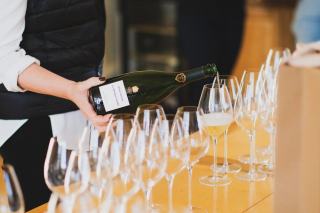
Outside cooperative tasting rooms and a handful of large properties, there is no permanent reception desk. The person who will pour your wine is frequently the person who pruned the vines, and they are somewhere on the property. An email a few days ahead, or a phone call the day before, changes everything: it turns an interruption into an appointment.
The hours nobody warns you about
Rural France still closes for lunch, roughly from noon until two. A tasting planned for half past twelve will find locked gates, and this catches out more visitors than any language barrier. Many estates also close on Sunday, some on Monday, and during the September and October harvest a good number suspend visits entirely because every pair of hands is in the vineyard.
Spitting is expected, not rude
A spittoon is provided for a reason, and using it signals experience rather than disdain. It also matters legally: the French limit is half a gramme per litre of blood, and a lower threshold applies to drivers holding a licence for less than three years. Six samples at a single estate, repeated twice in an afternoon, adds up faster than most visitors expect. Having a designated driver, or planning stops within one village, is the practical answer.
What the tasting costs, and what it implies
Many estates still pour without charge, and where a fee applies it is often deducted from a purchase. Nobody will press you to buy, but leaving with nothing after an hour of a producer's time is noticed. Buying a single bottle is a perfectly adequate answer.
Getting the wine home
Most producers ship within the European Union, and many can arrange carriage beyond it, where duties and volume limits then apply. If you carry bottles yourself, they travel in hold luggage with proper protection, never in the cabin. Plan this before touring the classified estates, whose bottles are the ones you will least want to break.