The legal drink driving limit in France is 0.5 grammes of alcohol per litre of blood, read by a roadside device as 0.25 milligrammes per litre of exhaled air. French law holds any driver with a licence under three years old to 0.2 g/L. For a traveller touring vineyards, the first figure is worth two glasses of wine.
The short version
- 0.5 g/L of blood is the legal maximum permitted for most drivers, the level used across most of Europe, and 0.2 g/L in the first three years of a licence or at the wheel of a coach.
- One standard French glass, roughly 10 cl of wine at 12 degrees, lifts blood alcohol content (BAC) by about 0.20 to 0.25 g/L.
- Police may stop any driver or vehicle at the roadside without suspicion, and penalties run from a 135 euro fine to 9000 euros and three years in prison, the higher ceiling now applied to readings of 0.8 g/L and above.
- A sober nominated driver, a bicycle or simply spitting removes the arithmetic, which is why every cellar keeps a bucket on the counter.
What the French limit actually says
Article R234-1 of the French highway code fixes the threshold at 0.5 grammes of alcohol per litre of blood. The equivalent figure in exhaled air, which is what a roadside breath device measures, is 0.25 milligrammes per litre. Expressed the way British and American guides usually write it, 0.5 g/L is the same quantity as 0.05 percent, or 50 milligrammes of alcohol per 100 millilitres of blood.
Those four numbers describe one single legal threshold, and the confusion they cause is real. A visitor who has read that the limit at home is 80 milligrammes per 100 millilitres, as it remains in England, Wales and Northern Ireland, is looking at a country where the permitted quantity is a little over a third smaller. The gap matters most at the end of an afternoon, when the difference between two glasses and three has stopped feeling significant.
Neither figure is a target, and no French text presents it as one. The threshold marks the point at which driving becomes punishable, not the point at which alcohol begins to affect reaction time, which happens well below it.
The lower threshold for new drivers
Since July 2015 a separate rule applies to anyone holding a probationary licence: 0.2 g/L of blood, or 0.10 milligrammes per litre of breath. The French administration applies the same figure to learners in accompanied driving. The probationary period runs three years, reduced to two for drivers who learned through accompanied driving. In practice the figure is below what a single glass produces, so the honest reading is zero. The same 0.2 g/L threshold covers drivers of buses and coaches, which is worth knowing if your group has hired one for the day.
This catches out young visitors driving a hire car far more often than it catches French residents, because a foreign licence issued three months ago is treated on French roads exactly as a French one would be.
How many tasting pours that allows
French public health guidance counts a standard drink as 10 grammes of pure alcohol, which is roughly 10 centilitres of wine at 12 degrees. One such glass raises blood alcohol content by about 0.20 to 0.25 g/L in an average adult, less in a heavy person, more in a light one. Two glasses therefore put most people at or very near the threshold, and a third puts almost everyone past it.
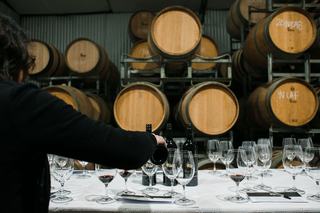
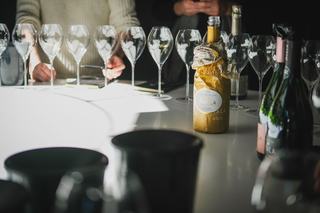
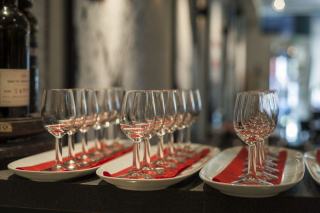
A cellar door works differently from a restaurant table. A proper tasting pour is two to three centilitres, so three of them make up something close to a single glass. The trouble is the count: six wines at one estate is unremarkable, two estates in an afternoon is a normal itinerary, and the total arrives at four or five glasses without anybody having sat down to drink. Add the lunch that wine routes are built around and the arithmetic is settled before the last visit.
The other half of the calculation is time. The body eliminates alcohol at roughly 0.10 to 0.15 g/L per hour, and nothing shortens that. Coffee, food, a walk in the vines and fresh air change how alert a driver feels without changing what the device will read. Blood alcohol content also keeps rising for about half an hour after the last mouthful, so the figure at the moment you turn the key is not the figure the police will measure twenty minutes down the road.
Why the spittoon is there
Every serious tasting room provides one, and every professional uses it. Spitting removes most of what would otherwise be swallowed, though not quite all of it, since a small quantity passes through the lining of the mouth. It is the single measure that lets a driver taste a full range at three estates and stay comfortably clear of any threshold. Nobody behind a counter reads it as a judgement on the wine, and the etiquette around it is covered in more detail in our guide to arranging a visit to a working estate.
What it costs to be caught
French law splits the offence into two bands, and they are not comparable in severity. The upper band was made markedly harsher by the road-violence law that also created the offence of road homicide, and many English-language guides still quote the old figures.
- Between 0.5 and 0.79 g/L, the matter is an administrative infraction. The standard fixed penalty is 135 euros, six points are removed from a French licence, and the licence may be suspended for up to three years.
- From 0.8 g/L, or 0.40 milligrammes per litre of breath, it becomes a criminal offence: up to 9000 euros, up to three years of imprisonment and six points. A court can suspend the licence for up to five years, or cancel it and bar a new application for the same period. The vehicle can be immobilised at the roadside and confiscated.
- An interlock as a sentence: the court may also restrict the driver, for up to five years, to vehicles fitted with an alcohol interlock, the device that will not let the engine start until the driver has blown a clean sample.
- Refusing the test is a criminal offence carrying the same three years and 9000 euros, so declining a breath check gains nothing.
- Probationary licence holders caught over 0.2 g/L pay 135 euros and lose six points. Since a probationary licence starts with six, that is the whole licence.
A driver on a foreign licence cannot lose French points, which occasionally leads visitors to assume the rules are decorative. They are not. The fine is payable on the spot, a French court can ban the holder from driving anywhere in France, and the hire company will be notified if the car is immobilised. Repatriating a group and an impounded vehicle from a rural wine region on a Sunday is an expensive way to end a holiday.
What it does to a hire car and your insurance
This is the part that travel guides omit and that costs foreign visitors the most. Almost every rental agreement in France names driving under the influence as a breach of contract, which matters the moment a tasting day turns into one of the self-drive routes between appellations. When the clause is triggered, the collision damage waiver and the excess reduction the traveller paid for at the desk stop protecting them, and the full value of the vehicle becomes their problem.
The same logic runs through a travel insurance policy. Cover for medical costs, repatriation and third-party claims is routinely written to exclude an accident in which the policyholder was over the legal alcohol level, and the exclusion applies whether or not the driver caused the collision. Compulsory third-party motor insurance still pays the victim, because French law protects them, but the insurer can then turn round and recover the money from the driver.
Add the practical costs and the day gets expensive quickly. A car immobilised at the roadside has to be recovered, a group in a rural region has to find transport at short notice, and a rental returned late through an impound yard attracts its own charges. Beside those figures, a 135 euro fine is the smallest line on the bill.
How France compares across Europe
France sits with the majority of the continent, and the countries either side of it differ enough to make an assumption dangerous for anyone driving across borders.
| Legal threshold | Countries |
|---|---|
| 0.0 g/L | Czech Republic, Hungary, Slovakia, Romania |
| 0.2 g/L | Sweden, Poland, Norway, Estonia |
| 0.5 g/L | France, Germany, Italy, Spain, Portugal, Belgium, Netherlands, Austria, Switzerland, Ireland, Scotland |
| 0.8 g/L | England, Wales, Northern Ireland |
Several of these countries apply a stricter figure to inexperienced drivers on top of the general one, as France does. Germany requires zero from drivers under twenty-one or in their first two years, Italy and Spain apply reduced thresholds to novices, and the Netherlands sets 0.2 g/L. Anyone planning a trip that crosses from Alsace into Germany, or from the Roussillon into Spain, is changing rules at the same moment as changing road signs.
What happens at a roadside check
French police and gendarmes may carry out a breath test without needing any suspicion of an offence, and checkpoints are a routine feature of Saturday nights, public holidays and the weekends of village wine festivals. On a wine route in September, when harvest events fill the villages, they are more common rather than less.
The procedure is short. A screening device gives an immediate reading; if it shows a positive result, a second measurement follows on a calibrated instrument, and a blood test can be requested. Everything then rests on that second figure. Carry the vehicle documents, the rental agreement and your licence, since a check for one thing tends to become a check for everything.
The breathalyser rule that no longer exists
Many English-language guides still state that every vehicle in France must carry a single-use breathalyser. That requirement was introduced in 2012, its penalty was postponed indefinitely, and the obligation itself was removed in 2020. There is nothing to buy at the ferry port. What did survive is the duty placed on late-night bars and clubs to make testing devices available to their customers, which is a different rule aimed at a different situation.
Carrying one anyway is not a bad habit for a tasting day, simply because it converts a guess into a number. Single-use devices are sold in French pharmacies and supermarkets for a couple of euros, and the reading they give is indicative rather than legally binding.
Questions visitors ask before a tasting day
What is the drink driving limit in France?
It is 0.5 grammes of alcohol per litre of blood, equal to 0.25 milligrammes per litre of exhaled air, or 0.05 percent. Anyone who has held a licence for under three years is limited to 0.2 g/L instead.
What is the legal blood alcohol concentration?
The legal blood alcohol concentration in France is 0.50 g/L. British and American sources often express the same quantity as 50 milligrammes per 100 millilitres of blood.
How many drinks can you have before driving?
One standard glass of about 10 centilitres of wine raises blood alcohol content by 0.20 to 0.25 g/L, so two glasses bring most adults to the threshold. Body weight, food and the time elapsed all shift the result, which is why no number can be given as a guarantee.
What are the penalties for drink driving in France?
Between 0.5 and 0.79 g/L the driver faces a 135 euro fine, six licence points and a possible suspension. From 0.8 g/L the offence carries up to 9000 euros, three years of imprisonment, confiscation of the vehicle and cancellation of the licence for up to five years.
How does the French limit compare to other countries?
France applies the same 0.5 g/L as most of the European Union. England, Wales and Northern Ireland allow 0.8 g/L, Sweden and Poland 0.2 g/L, and the Czech Republic, Hungary, Slovakia and Romania permit none at all.
What are the rules for drinking and driving with a foreign licence?
The same rules apply in full. A foreign licence cannot lose French points, but the fine is payable immediately, the vehicle can be immobilised, and a court can prohibit the holder from driving in France.
What should I know about driving in France after a tasting?
That the alcohol level keeps climbing for around thirty minutes after the last mouthful, that the body clears it at roughly 0.10 to 0.15 g/L an hour, and that nothing accelerates the process. Waiting is the only method that works.
Touring the vineyards without doing the arithmetic
The visitors who taste most freely are the ones who arranged not to drive. That is easier in France than it looks, and it costs less than a cancelled holiday.
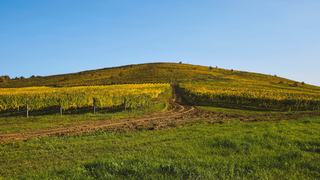
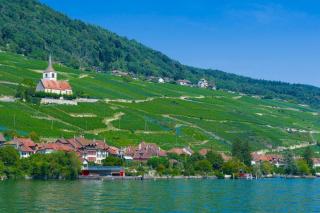
Wine regions run minibus excursions from their tourist offices and from the larger towns, usually half a day with two or three estates and a driver who knows which gates open when. Many estates will call a taxi, and the bigger appellations have private driver services built specifically around cellar visits; the trade-offs are set out in our comparison of a guided wine tour in France against driving yourself. Where the terrain allows, the vineyards themselves are the attraction: the Alsace and Burgundy routes have marked cycle paths running between villages, and exploring the vines by bicycle solves the problem and improves the day at once.
The other approach is to stop moving. Sleeping where you taste turns the whole question into somebody else's, and estates that take guests overnight are common across every French region. If you do intend to drive yourself, plan the route so the tastings sit at the end of the day rather than the middle, and leave the boxes of bottles for the following morning: the allowances that apply to bringing wine home from France through customs are worth checking before the boot is loaded.
None of this is a reason to taste less. It is the reason the spittoon exists, the reason the French wine trade takes it for granted, and the reason a designated driver is a normal part of a group booking rather than an awkward request.
Wine is best enjoyed in moderation, and excessive drinking is harmful to health. This page is a visitor's guide written by an independent wine tourism site, not legal advice: the thresholds and penalties in force are published by the French administration on service-public.gouv.fr and by the road safety authority on securite-routiere.gouv.fr.