
Most buying wine in France tips come down to one habit: taste the bottle before you pay for it. A wine tasting with independent winemakers, a wine shop in Paris or Nice, or a local cooperative lets you try French wines first, and each place offers a different range and level of advice.
Where to buy wine, and why. Book a tasting at the estate for the grower's own cuvées and a bottle of wine with a story. Visit a Paris wine merchant to compare French wine regions in one stop. Buy wine at the supermarket only during the autumn fairs, and learn how to choose French wine from the label before you pay.
How a wine tasting at a French cellar door works
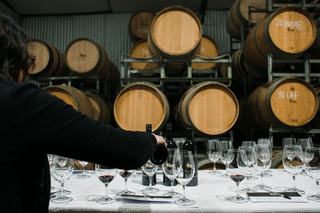
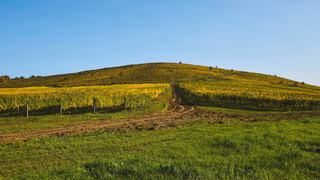
Visiting vineyards in France to buy wine is usually informal, but local wine producers follow a few unwritten rules. Small family domaines rarely keep fixed opening hours: the vigneron who pours your French wine is often the same person who prunes the vines, so ringing ahead or booking online is the polite way to arrive. Many estates close between noon and two in the afternoon, and Sunday visits are the exception rather than the rule outside the busiest wine routes. The harvest, from late August in the south to October in the north, is the worst period to turn up unannounced.
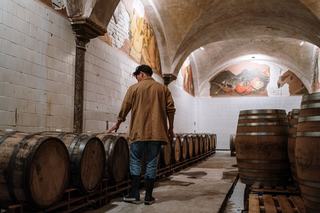
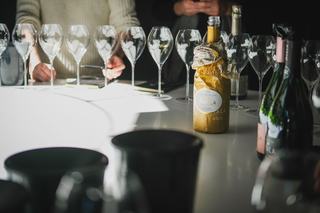
The sampling itself is often free at independent winemakers, while the larger Bordeaux or Champagne houses usually charge for a guided visit. No one expects you to buy a whole case, yet leaving with a few bottles after an hour with the owner is the custom. Spitting is normal and nobody will be offended, which matters if you are driving. A small grower also values the privacy of a working cellar: ask before taking photos of the barrels or the family. If you would rather leave the logistics to someone else, a guided wine tour with a driver books the appointments and handles the timing between villages.
Bring cash as a fallback. Card machines are now common, but a remote estate in the Jura or the Ardèche hills can still have a weak mobile signal, and a payment terminal that will not connect is a familiar sign of rural France.
Where to buy wine in France beyond the estates
Where to buy wine in France depends on what you want from the purchase: discovery, comparison or volume. Each type of seller answers a different need, and the best trips usually combine two of them.
Cavistes in Paris and the wine towns
A caviste is an independent wine shop, and France has thousands of them. In Paris, the neighbourhood caviste is the easiest way to explore regions you will not manage to visit: the owner tastes with the producers, knows which bottles are drinking well now and will happily open a conversation in English. Paris wine bars that double as retailers, the caves à manger, let you try a glass with food before you take the bottle home. Outside the capital, Beaune and its rue Carnot, the merchant streets of Bordeaux and the boutique of the Cité du Vin cover every region under one roof. A good merchant also stocks wine from very small producers who never reach supermarkets.
Cooperatives and wine sold in bulk
The cave coopérative is the local answer to everyday drinking. Growers of a village pool their grapes, and the cooperative offers red, white and pink wines by the bottle, in a box of 6 bottles or in bulk: you bring a container, or buy a bag-in-box, and the staff fills it from a pump that looks like a petrol nozzle. Quality has risen sharply since the 1990s, and in the Languedoc, the Rhone valley or Provence the cooperative is often where local families buy their own table wine. The labels mostly say IGP or Vin de France rather than a famous appellation.
How to buy wine at the supermarket
Buying wine at the supermarket makes sense in France at one moment of the year: the foires aux vins, the wine fairs that the big chains hold from early September into October, with a smaller spring edition. Retailers then bring in bottles from known estates and some grand cru wines, print a catalogue and place the special offers at the end of the aisles. Outside these fairs, the shelves hold a more ordinary range, and the bottles stand upright under bright lights for months. Check the vintage, look at the alcohol content to judge the style (a 12% white from the Loire valley will be lighter than a 14.5% red from the south) and favour recent years for everyday wine.
How to choose French wine from the label
A French wine label names the place first and the grape second, which puzzles visitors used to New World bottles. Learning a handful of terms solves most of the problem, and the mandatory mentions are the same in every region.
| On the label | What it tells you |
|---|---|
| AOC / AOP | Protected appellation: the wine comes from a defined area and follows rules on grape varieties, yields and ageing |
| IGP (formerly vin de pays) | Wider geographic area and looser rules; the grape is often named on the front |
| Vin de France | The category that replaced vin de table: no appellation, grapes may come from anywhere in France |
| Grand cru / premier cru | A classified vineyard or estate; the meaning differs between Burgundy, Alsace, Champagne and Bordeaux |
| Mis en bouteille au domaine / au château | Bottled by the estate that grew the grapes, rather than by a merchant |
| Alcohol content (% vol) | A quick guide to body and style before you open the bottle |
The capsule over the cork can carry a small letter as well. On the French tax capsule, an R points to a récoltant, a grower who bottles their own harvest, while an E points to an approved warehouse keeper, usually a négociant or a cooperative. Neither letter is a mark of quality, but it tells you who stands behind the wine. Wine guides and apps that scan labels help for famous names; for small producers, the advice of the person behind the counter is more reliable.
Learning to spot French wine regions on the shelf
French wine regions are easier to recognise by their grapes than by their maps. The Loire valley means sauvignon blanc in Sancerre, chenin in Vouvray and cabernet franc in Chinon. Burgundy is pinot noir for red wines and chardonnay for the whites. Bordeaux blends cabernet sauvignon and merlot, the Rhone valley relies on grenache and syrah, with Chateauneuf du Pape as its best known appellation, and Provence is the home of pale rose wine. Alsace is the exception that names the grape on the label, and Champagne is the reference for sparkling wine, alongside the crémants made in most other regions.
Some appellations are small enough to surprise even French buyers. Bellet, a tiny vineyard inside the city limits of Nice, produces red, white and pink wines from local grapes, and its bottles are rarely seen outside the Côte d'Azur. Buying them on the spot is one of the nice rewards of travelling slowly. The same goes for the Jura, Savoie or the vineyards of the South West: their wine producers market most of their output locally, so the estate or a regional merchant is the place to find them. Knowing the rich history behind each region also makes the cellar visit more interesting, because a grower will share far more with a visitor who asks about the soil than with one who only asks the price.
What to avoid when buying wine in France
Old vintages are the first trap. A bottle of white or pink wine from five years ago, left upright on a supermarket shelf, has often lost its freshness; outside the great appellations, most French wine is made to be drunk within two or three years. Ask when the bottle arrived and how it was stored, and leave aside any bottle whose cork has risen, whose level has dropped into the neck or whose label shows stains from leaking wine. These are the usual signs of heat damage, and a bad wine is rarely the producer's fault.
Cheap wine is not the problem in itself: France makes plenty of honest, affordable wine, and a good cooperative or merchant offers an affordable selection. The risk lies in souvenir stores near famous sites that push anonymous bottles with prestige-sounding names and no producer address. A real French label always shows who bottled the wine and where. Be wary too of buying fine wine in bulk without paperwork: for expensive bottles, a receipt and the estate's details are your only proof of origin if you later resell or insure the bottles.
Getting your bottles home in good shape
Heat is the enemy on the drive back. A car parked in the sun in July can turn a boot into an oven within an hour, so a cool box, a blanket over the cases and short stops make a real difference. Cases of six or twelve travel better than loose bottles, and most estates provide cardboard shippers on request. Plan the day so that the purchases come at the end of the route, and remember that sampling and driving do not mix: the French blood alcohol limit for drivers is lower than in some visitors' home nations, and roadside checks are frequent on wine routes.
For larger purchases, estates and merchants can recommend specialist carriers, and many of them now ship within Europe themselves. Travellers returning outside the European Union face customs allowances that changed recently for the United Kingdom, so the customs limits on bringing bottles back are worth checking before you fill the boot. Keep every receipt: it is the simplest way to show customs that the bottles are for your own table.
Receipts, samples and shipping: short answers for visitors
Do I have to buy after a free sample at a French estate?
There is no legal obligation to buy after a free sample. Buying two or three bottles is the custom at small family estates, where the owner gives up working hours to receive you, while large estates that charge for the visit expect nothing more.
Is wine cheaper at the estate than in town?
Wine is not always cheaper at the estate. The producer sets a cellar door price close to the retail price so as not to undercut the merchants who stock the wine; the real gain is access to cuvées and older vintages that never reach retail.
Can a French wine merchant ship bottles abroad?
Many French wine merchants ship within the European Union, and some work with carriers for the United Kingdom or North America. Ask for a written contents declaration, which simplifies customs clearance at the other end.