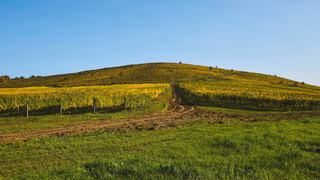

The Burgundy vineyards are the wine slopes of eastern France where Pinot Noir and Chardonnay express each climat, from Chablis through the Côte de Beaune to Mâcon. Grand cru, village wine or château tasting in Beaune: the vineyard plot comes first, and most family domaines receive visitors by appointment.
- Where the wine comes from
- Five wine areas: Chablis, the Côte de Nuits, the Côte de Beaune, the southern Côtes and the Mâconnais, with Pinot Noir for red Burgundy and Chardonnay for white Burgundy.
- How it is ranked
- By vineyard, not by producer: regional Bourgogne, commune, premier cru and grand cru, the top tier covering about 1 percent of the harvest.
- How to visit
- Base yourself in Beaune or Dijon, book each domaine and château tasting ahead, and explore the Clos de Vougeot and the Route des Grands Crus by bike.
How the Burgundy vineyards are laid out, north to south
The Burgundy vineyards do not form one block of vines but a string of separate wine areas spread over roughly 230 kilometres of eastern France, from the Yonne department near Auxerre down to the edge of the Beaujolais. Each area has its own soils, its own communes and its own rhythm of visits, which is why a first trip works better when it concentrates on one or two of them rather than trying to cover the whole region in a weekend.
At the northern end, Chablis sits on its own, closer to Paris than to Beaune, on rolling hills of Kimmeridgian limestone. Some 130 kilometres to the south-east begins the Côte d'Or, the famous escarpment that runs from Dijon to Santenay and splits into the Côte de Nuits and the Côte de Beaune. Below it, the Côte Chalonnaise brings gentler slopes and quieter villages, and the Mâconnais closes the region with broad white wine country around the rocks of Solutré and Vergisson.
The table compares the five areas on the points that matter when you plan visits: the main grapes, the wine style, the best-known names and the town that makes a practical base.
| Area | Main grapes | Wine style | Names to know | Visiting base |
|---|---|---|---|---|
| Chablis and the Yonne | Chardonnay, some Pinot Noir, Sauvignon Blanc in Saint-Bris | Taut, mineral Chardonnay | Les Clos, Vaudésir, Montée de Tonnerre | Chablis or Auxerre |
| Côte de Nuits | Pinot Noir above all | Structured Pinot Noir built to age | Gevrey-Chambertin, Clos de Vougeot, Vosne-Romanée | Dijon or Nuits-Saint-Georges |
| Côte de Beaune | Chardonnay and Pinot Noir | Great whites, supple reds | Corton, Pommard, Meursault, Montrachet | Beaune |
| Côte Chalonnaise | Pinot Noir, Chardonnay, Aligoté | Fresh reds and whites, good value | Bouzeron, Rully, Mercurey, Givry | Chalon-sur-Saône |
| Mâconnais | Chardonnay, some Gamay | Round, sunny Chardonnay | Pouilly-Fuissé, Saint-Véran, Viré-Clessé | Mâcon |
Chablis deserves a day of its own, and the Chablis wine tasting cellars around the Serein valley sit far enough from the Côte d'Or that combining both in one afternoon rarely works.
Climats, villages and crus: reading the Burgundy classification
Burgundy wine is classified by the land it grows on, not by the estate that makes it, and this single idea explains most of what a visitor hears in a cellar. A climat is a named plot of vineyard with its own soil, slope and exposure, sometimes recorded for centuries, and the same climat is often split between several owners. Two domaines can therefore bottle wine from the same grand cru, side by side on the shelf, with different results.
Regional and village appellations
The regional appellations form the base of the pyramid and carry the Bourgogne name, sometimes with a grape or an area added, such as Bourgogne Aligoté or Bourgogne Hautes-Côtes de Nuits. These wines account for about half of the region's production and are the bottles most visitors taste first. One step up, the village appellations carry the name of a commune, such as Meursault, Pommard or Gevrey-Chambertin, and the grapes must come from inside that commune's limits. Burgundy counts 84 appellations in total according to the Bureau Interprofessionnel des Vins de Bourgogne (BIVB), and most of them are village names.
Premier cru and grand cru
A premier cru is a recognised climat within a village appellation, and its label shows the village name followed by the plot, for example Volnay Clos des Chênes or Nuits-Saint-Georges Les Vaucrains. A grand cru sits at the top, and its label usually gives only the vineyard name: Chambertin, Musigny, Corton or Montrachet, with no village at all. The 33 grand cru appellations cover about 1 percent of Burgundy's output, which explains both their reputation and the fact that tasting them at a cellar door is the exception rather than the rule. Knowing this ladder before the first appointment makes conversations with winemakers easier, and most of them enjoy explaining why one row of vines gives a different wine from the next.
A short history of the Burgundy vineyards, from monks to UNESCO
The history of the Burgundy vineyards owes a great deal to the Church. From the twelfth century, the Cistercian monks of the Abbey of Cîteaux, founded in 1098 a few kilometres east of the slope, and the Benedictines of Cluny planted, walled and observed vines for generations. The Cistercians built the walled Clos de Vougeot and noted which parcels ripened best, laying the groundwork for the climats that still structure the region.
The Dukes of Burgundy then made wine a matter of prestige. In 1395, Duke Philippe le Hardi ordered the Gamay grape pulled from the best slopes in favour of Pinot Noir, a decision that still shapes the red wines of the Côte d'Or. In 1443, Nicolas Rolin, chancellor of Duke Philip the Good, founded the Hospices de Beaune, a charitable hospital that later received vineyards as donations; its wines are still sold at an auction held every November.
After the French Revolution, Church lands were sold and split, and inheritance law divided them again over the following generations, which is why one grand cru can have dozens of owners today. Phylloxera devastated the vines at the end of the nineteenth century, and the appellation system set up in the 1930s fixed the boundaries that labels follow. The Route des Grands Crus, the signposted wine road of the Côte d'Or, dates from 1937. In 2015, UNESCO added the Climats, terroirs of Burgundy to its World Heritage list, together with the historic centres of Dijon and Beaune, recognising a heritage of land use rather than a single monument.
Pinot Noir, Chardonnay and the other Burgundy grapes
Burgundy wines rest on two grape varieties, Pinot Noir for the reds and Chardonnay for the whites, and visitors who arrive from Bordeaux are often struck by the absence of blends. A Burgundy red is almost always a single-variety Pinot Noir, while a red from Bordeaux mixes Merlot and Cabernet Sauvignon. That single grape is what makes the differences between climats so easy to taste: the variety stays the same, and only the place changes.
Pinot Noir gives red wines of light colour and high aromatic intensity, with red fruit when young and earthy, spicy notes with age. The Côte de Nuits is its heartland, but the grape also grows in the Côte de Beaune, the Côte Chalonnaise and around Irancy in the Yonne. Chardonnay, the white grape, changes style from one area to the next: lean and saline in Chablis, rich and toasty in Meursault, broad and ripe in the Mâconnais. Many visitors discover on the spot that their favourite oaked Meursault and an unoaked Chablis come from the same grape.
Beyond the two great varieties, the region keeps some smaller ones. Aligoté, a crisp white grape, has its own village appellation at Bouzeron in the Côte Chalonnaise. Gamay survives in the Mâconnais and in Coteaux Bourguignons blends. Saint-Bris, near Auxerre, is the only Burgundy appellation for Sauvignon Blanc, a curiosity worth tasting on the way to Chablis. A few estates also make Crémant de Bourgogne, the region's sparkling wine, from Pinot Noir and Chardonnay; it is a common welcome glass in cellars.
Exploring the Côte de Nuits along the Route des Grands Crus
The Côte de Nuits is the northern half of the Côte d'Or, a narrow band of Pinot Noir communes that starts just south of Dijon at Marsannay and ends past Nuits-Saint-Georges. Most of Burgundy's red grand cru vineyards sit here, along a slope only a few hundred metres wide, and the Route des Grands Crus threads through each village in turn. Driving the whole stretch takes well under an hour, which leaves the rest of the day for cellars and walks.
From Gevrey-Chambertin to the Clos de Vougeot
Gevrey-Chambertin holds nine grand cru vineyards, more than any other village, including Chambertin and Chambertin-Clos de Bèze. Further south, Morey-Saint-Denis and Chambolle-Musigny are smaller and calmer; the walk between them on the vineyard path above the road gives one of the best views of the slope. Then comes the Clos de Vougeot, about 50 hectares of vines inside a stone wall raised by the Cistercians. The Château du Clos de Vougeot, a wine estate building with medieval presses and a great cellar, is open to visitors and serves as home to the Confrérie des Chevaliers du Tastevin, the wine brotherhood that holds its dinners there. Its exhibition on monastic winemaking makes a good first stop before any domaine visit.
Vosne-Romanée and Nuits-Saint-Georges
Vosne-Romanée is the most famous wine village of the Côte de Nuits, home to Romanée-Conti, La Tâche, Richebourg and Romanée-Saint-Vivant. These grand cru estates rarely receive the public, but walking past the stone cross and the low walls of the Romanée-Conti vineyard is free and open to all, and many visitors make the short trip only for that photograph. Nuits-Saint-Georges, the small town that gives the Côte de Nuits its name, has no grand cru but many premier cru vineyards and several négociant cellars that open without an appointment, which makes it a useful stop on a Sunday. The Côte de Nuits also has a hilltop sister area, the Hautes-Côtes de Nuits, where family domaines in quiet hamlets often have more time for visitors than their famous neighbours.
Beaune and the Côte de Beaune: cellars, châteaux and great whites
Beaune is the wine capital of Burgundy and the most practical base for exploring the Côte de Beaune, with walking access to dozens of cellars, a train station and hotels at every level. The town's walled centre sits on a labyrinth of cellars, many belonging to the négociant houses that buy grapes or wine and bottle under their own name. Maison Joseph Drouhin, Bouchard Père et Fils, which owns the Château de Beaune, and several other houses offer cellar tours with tastings, often bookable online.
The Hospices de Beaune and the town cellars
The Hospices de Beaune, also called the Hôtel-Dieu, is the town's landmark, famous for its glazed polychrome roof tiles and its great hall of beds for the poor. The museum explains how the hospital came to own vineyards, now some 60 hectares, many of them premier cru or grand cru, and the charity auction of its new wines takes place every year on the third Sunday of November. The Cité des Climats et Vins de Bourgogne, opened in 2023, adds a modern introduction to the region, with sister sites in Chablis and Mâcon. In Dijon, the Cité internationale de la gastronomie et du vin, opened in 2022, covers food and wine together.
From Corton and Pommard to Meursault and Santenay
The Côte de Beaune begins with the hill of Corton, the largest grand cru of Burgundy and one of the few to produce both red and white wines, including the white Corton-Charlemagne. South of Beaune, Pommard and Volnay make reds with very different temperaments, firm for the first and delicate for the second; the Château de Pommard welcomes visitors with tours and tastings. Meursault opens the great white wine country, and the Château de Meursault has vast vaulted cellars that are among the most visited in the region. Puligny-Montrachet and Chassagne-Montrachet share the Montrachet grand cru, while Saint-Aubin, tucked into a side valley, offers premier cru whites that often cost far less than their neighbours. At the southern end, Santenay closes the Côte d'Or, and the Voie des Vignes cycle path links it to Beaune through the vines.
Cycling is the most enjoyable way to explore this stretch, with gentle gradients and a cellar stop every few kilometres; organised cycling wine tours with bike hire and luggage transfer remove the need for a car altogether.
Chablis, Chalon and Mâcon: the quieter side of the region
The parts of the Burgundy vineyards outside the Côte d'Or receive fewer visitors, and that is their great strength: easier appointments, smaller crowds and winemakers with more time to talk. Chablis, in the north, has its own rhythm, with seven grand cru climats on a single hillside facing the town, including Les Clos, Blanchot and Grenouilles. The Chablis wine route crosses villages such as Chichée, Fleys and Maligny, where family estates open their cellars, and the town's main street is lined with tasting rooms run by local estates and by the cooperative La Chablisienne, which sources grapes from across the appellation.
The Côte Chalonnaise, south of Santenay, is a land of mixed farming and woods where the vines share space with pasture. Bouzeron is the reference for Aligoté, Rully for whites and sparkling Crémant, Mercurey for reds, Givry for supple Pinot Noir and Montagny for white premier cru wines. Chalon-sur-Saône, on the river, makes a convenient base. The area also suits travellers who would rather drink well than chase famous labels, as several premier cru wines here remain affordable.
The Mâconnais, the southern end of Burgundy, mixes vines with Romanesque churches and the limestone cliffs of Solutré and Vergisson. Pouilly-Fuissé is its best-known appellation and has had its first premier cru climats since the 2020 vintage. Saint-Véran, Viré-Clessé and the many Mâcon-Villages wines offer ripe, approachable white wines. Further south, the landscape turns to granite and Gamay, and the trip can continue on a Beaujolais wine tour of the ten crus.
How to plan a trip to the Burgundy vineyards
A well-planned trip to the Burgundy vineyards starts with the season, the base town and a handful of appointments, in that order. Most domaines are family businesses where the winemaker also runs the cellar and works the vines, so visits fit around the farming calendar rather than around tourist hours.
When to go
Spring, from late April to June, brings long days, green vines and calm cellars, and it is arguably the best season for walking and cycling. The harvest, usually in September, is lively but busy: many small estates close to visitors during picking. Late autumn adds the colours of the vines and the Hospices de Beaune auction weekend, with its street festivities and packed hotels. Winter is quiet, with some cellars closed, but those that open often give longer, more personal visits. Our guide to the best season for wine tasting in France compares these periods across regions.
Getting there and getting around
Dijon is about an hour and a half from Paris by TGV, and regional trains continue to Beaune, Nuits-Saint-Georges, Chalon-sur-Saône and Mâcon. A car gives the most freedom between villages, but tasting and driving do not mix: the designated driver should spit every wine, and many travellers prefer a bike, a driver or a guided wine tour with a local driver-guide for days with several tastings. Small group tours from Beaune and Dijon cover the Route des Grands Crus in a half or full day, often with a domaine visit and a cellar in a château.
Appointments, etiquette and buying wine
Small domaines need an appointment, ideally made a week or more ahead by email or through their website, and a short note on your level of wine knowledge helps the winemaker prepare. Arrive on schedule, keep group sizes small, spit when tasting several wines, and ask before taking photos in the cellar, since a working cellar is also a private home and the family values its privacy. Buying a bottle is rarely required but always appreciated after a long tasting. The steps for booking a winery visit in France apply fully here, and two or three domaines a day is a comfortable pace that leaves room for lunch and a walk in the vines.
Booking, tasting and getting around in Burgundy wine country
What are the best wineries to visit in Burgundy?
The best wineries to visit in Burgundy depend on what you want to taste. For history, the Château du Clos de Vougeot and the Hospices de Beaune are essential; for large cellars, the Château de Meursault and the négociant houses of Beaune; for intimate tastings, small family domaines in villages such as Chambolle-Musigny, Saint-Aubin or Givry, always by appointment.
How many days do you need for the Burgundy vineyards?
Three days cover the Côte d'Or comfortably: one for the Côte de Nuits, one for Beaune and the Côte de Beaune, one for the villages around Meursault and Puligny-Montrachet. Add a day for Chablis and another for the Côte Chalonnaise or the Mâconnais to see the whole region without rushing.
Can you visit Burgundy vineyards without a car?
Yes, Burgundy is one of the easiest French wine regions to visit without a car. Trains link Dijon, Beaune and Mâcon, the Voie des Vignes cycle path runs from Beaune to Santenay, and many guided tours and private drivers start from Beaune or Dijon.