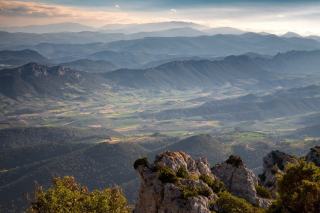

The Alsace wine route is a signposted road of about 170 kilometres, opened in 1953, that links more than 70 picturesque villages of the Alsace vineyard, from Marlenheim near Strasbourg to Thann south of Colmar. The oldest wine route in France crosses a compact wine region of 15,600 hectares where visitors discover grand cru slopes, Alsatian winegrowers and Riesling tasting rooms in a single day.
- Length and ends
- Around 170 km from Marlenheim (Bas-Rhin) to Thann (Haut-Rhin), signposted "Route des Vins d'Alsace", the best known wine route in France to visit by car or bike.
- Best base
- Colmar, or Riquewihr and Kaysersberg, to visit the central wine villages and the densest cluster of Alsace grand cru vineyards.
- Alsace wines to taste
- Riesling, Pinot Gris, Gewurztraminer and Muscat, labelled by variety, plus Crémant d'Alsace and Pinot Noir.
- Time needed
- Three days to see the north, centre and south without rushing; a single outing covers only the central section.
What is the Alsace wine route?
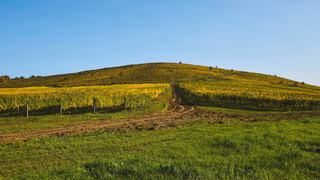
The Alsace wine route, or Route des Vins d'Alsace in French, is a marked tourist road that follows the eastern foothills of the Vosges mountains, between the mountains and the Alsace plain. Brown signs with a wine glass mark the way through the Bas-Rhin department in the north and the Haut-Rhin department in the south. The drive never strays far from the vines: the Alsace vineyard is a narrow strip, rarely more than a few kilometres wide, running parallel to the Rhine and, beyond it, to the Black Forest in Germany.
The route was created in 1953 to bring visitors back to a region that had changed nationality several times and suffered heavily during the Second World War. Its idea was simple and has aged well: link the wine villages by small roads so that travellers discover the winery doors, the half-timbered houses and the hillside vineyards one after another. Tourist offices along the way publish a map of the whole road, the easiest way to explore it stage by stage. Seventy years later, the Alsace wine region still lives largely from this mix of wine growing, culture and wine tourism, and many family domaines open their tasting rooms directly onto the village street.
Much of what makes the route unique is its history. Several towns along it, including Colmar, Obernai and Turckheim, belonged to the Décapole, a league of ten free imperial cities of the Holy Roman Empire founded in 1354. Their ramparts, gate towers and merchant houses explain why so many Alsatian villages look like miniature towns rather than farming hamlets.
Where does the drive start and end, and what changes along the way?
The Alsace wine route runs north to south, from Marlenheim, about twenty kilometres west of Strasbourg, to the entrance of the Thur valley. Most travellers do not drive it in one go: the road links them by lanes, roundabouts and narrow streets, and the pleasure lies in stopping. Splitting the travel into three sections helps to plan nights and tastings.
Northern Alsace: Marlenheim to Sélestat
The northern part of the route crosses the Bas-Rhin, a quieter stretch with fewer coaches and more mixed farming. Marlenheim, Molsheim, Rosheim, Obernai, Barr, Mittelbergheim and Dambach-la-Ville follow one another along the slopes. Obernai has a busy market square and the Kappelturm belfry; Mittelbergheim, classed among the most beautiful villages of France, overlooks the Zotzenberg grand cru, known for its Sylvaner. This section is easy to reach from Strasbourg, the capital of Alsace, and pairs well with a day in the Petite France quarter and a visit to the Notre Dame cathedral.
Central Alsace: from Bergheim to the Weiss valley
Between Bergheim and Kaysersberg lies the stretch most visitors picture when they think of Alsace. Ribeauvillé sits beneath three ruined castles; Hunawihr has a fortified church among the vines; Riquewihr keeps an almost intact walled old town with its Dolder tower; Kaysersberg combines a castle ruin, a fortified bridge over the Weiss and excellent winemakers. This central triangle fits in a single outing, which is also why its streets fill up in summer and in December.
Southern Alsace below Colmar
South of Colmar, the route climbs into the Haut-Rhin, where the vineyard is steeper and the grand cru slopes more dramatic. Turckheim, Eguisheim with its concentric circular streets, Gueberschwihr, Pfaffenheim, Rouffach, Westhalten and Guebwiller lead to Thann, whose Rangen grand cru rises on volcanic soil right above the town. Southern Alsace is less crowded than the centre and rewards those who drive the whole length.
A three-day Alsace wine route itinerary
This Alsace wine route itinerary covers the main villages without turning the trip into a race. The plan below starts in the north and ends in the south, with Colmar as the base for the last two nights; reversing it works just as well when arriving from Basel or Mulhouse.
- First stage, from Strasbourg to Dambach-la-Ville. Leave the capital of Alsace in the morning, stop in Molsheim and Obernai, walk the vineyard path above Mittelbergheim, then taste Sylvaner and Riesling in Andlau or Dambach-la-Ville before driving on to Colmar.
- Second stage, the heart of the route. Ribeauvillé in the morning, Hunawihr and Riquewihr around midday, then the Weiss valley in the afternoon. Book one winery visit, leave the rest to chance, and keep the evening for Colmar's historic centre.
- Third stage, south of Colmar. Turckheim and Eguisheim first, then the steep slopes of Gueberschwihr and Westhalten, and a last stop below the Rangen.
A shorter trip should focus on the central section, from Bergheim to the southern edge of Colmar: that is where the famous villages and the densest group of grand cru sites stand within a few kilometres of each other. Travellers who prefer someone else at the wheel can compare the options in this look at a guided wine tour versus driving yourself, which weighs flexibility against the freedom to taste.
Which villages are worth a stop?
The stops along the Alsace wine route share half-timbered houses, flower boxes and cellar signs, but each one has a different reason to stop. The table pairs the best known stops with what to see there and the grand cru slopes that overlook them, so that a walk in the streets can end with a tasting of the wine grown just above it.
| Village | Highlight | Nearby grand cru |
|---|---|---|
| Obernai | Market square, Kappelturm belfry, old ramparts | Kirchberg de Barr, a few minutes south |
| Mittelbergheim | Renaissance winegrowers houses, vineyard trail | Zotzenberg |
| Ribeauvillé | Three castles, Butchers' Tower, wine events | Geisberg, Kirchberg de Ribeauvillé, Osterberg |
| Riquewihr | Walled old town, Dolder tower | Schoenenbourg, Sporen |
| Kaysersberg | Castle ruin, fortified bridge, Albert Schweitzer's birthplace | Schlossberg |
| Turckheim | Night watchman's round in season, town gates | Brand |
| Eguisheim | Circular streets around the castle | Eichberg, Pfersigberg |
| Thann | Gothic collegiate church, end of the route | Rangen |
Colmar, the main destination on the route, deserves a separate mention. The town calls itself the capital of Alsace wines, hosts the regional wine fair each summer and keeps a remarkable historic centre, with the canals of the Petite Venise quarter, the Maison des Têtes and the Unterlinden museum. Hunawihr, Riquewihr and Mittelbergheim belong to the Plus Beaux Villages de France association, and Eguisheim (2013) and Kaysersberg (2017) have both won the French TV contest for the country's favourite village.
Alsace wines: grape varieties and grands crus
Alsace wines are among the easiest in France to read, because most labels name the grape variety rather than only the place. The Vins d'Alsace are mostly white and dry, bottled in a tall, slender flute, and the region grows a short list of varieties that every cellar on the route will pour:
- Riesling: dry, mineral, built to age; the grape that best shows the differences between soils.
- Pinot Gris: rich and smoky, often served with poultry or mushroom dishes.
- Gewurztraminer: aromatic, with rose and lychee notes, often off-dry.
- Muscat: dry and fragrant, a classic apéritif in Alsace.
- Sylvaner and Pinot Blanc: lighter, everyday wines for tarte flambée and the Alsatian table.
- Pinot Noir: the only red, lighter than its Burgundy cousin but much improved over the last decades.
The Alsace Grand Cru appellation covers 51 named vineyard sites, each with its own terroir, soil and exposure. The first one, the Schlossberg near Kaysersberg, was recognised in 1975; the list reached its current 51 sites in 2007, and since 2011 each grand cru has been a separate appellation. Tasting the same Riesling from two grands crus a few kilometres apart, say the granite of the Schlossberg and the limestone of the Osterberg, is one of the most instructive things a visitor can do here. Crémant d'Alsace, the region's sparkling wine, and the late-harvest styles, Vendanges Tardives and Sélection de Grains Nobles, complete the picture; the sweet wines are produced only in years when the fruit ripens far enough.
Alsatian cuisine explains part of this range. Choucroute, baeckeoffe, tarte flambée, Munster cheese and kougelhopf call for wines with acidity and aromatic intensity, and local winstubs pair them almost automatically: a dry Riesling with choucroute, an intense Gewurztraminer with Munster, a Pinot Gris with game or foie gras. Many domaines have been run by the same family for several centuries, and some trace their winery back to the 17th century; tasting with them is as much a lesson in regional culture as in wine. An incomparable way to understand a terroir is to order the same grape at lunch and taste it again at the cellar of the grower who made it.
Driving, cycling or walking the vineyards
Driving remains the most common way to follow the Alsace wine route by car, since it lets travellers cover the whole length and carry bottles home. The roads are narrow in the villages, parking fills up at weekends and in December, and the driver's tastings must stay within French limits: the rules, including the stricter threshold for new drivers, are set out on this page about the drink driving limit in France. Spitting is normal practice in Alsatian tasting rooms and nobody will take offence.
Cycling is the other classic option. The Véloroute du Vignoble, part of the EuroVelo 5 network, follows the foothills between the vineyards and the plain, with signposted links to each wine commune and steeper detours to the grand cru slopes. An electric bike makes the climbs easy, and several towns along the cycle route rent them out. For route ideas, gradients and luggage transfers, see how cycling wine tours across France compare from one region to another.
Walkers have marked vineyard paths, the sentiers viticoles, in many communes, often with boards explaining soils and varieties. The path between Riquewihr and Hunawihr, or the loop above Eguisheim, takes an hour or two and gives the best views of the Alsace plain, with landscapes of vines, orchards and forest where nature is never far from the wine.
When to visit, from harvest to Christmas markets
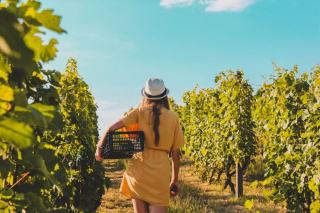
The Alsace wine route can be visited all year, but each season changes the trip. Spring brings blossom in the orchards between the vines and quiet cellars. Summer means wine festivals almost every weekend, outdoor tastings in village squares and the Colmar wine fair. Autumn is harvest time, from late August or September depending on the year, when the beautiful slopes turn gold and many winemakers are too busy to receive long visits.
December is a holiday season of its own. Strasbourg's Christkindelsmärik, one of the oldest Christmas markets in Europe, Colmar's several Christmas markets and the smaller ones in the wine villages draw large crowds; hotels fill months ahead, and mulled wine replaces the cool tasting glass. Winter travel needs accommodation booked early, and traffic builds around the most famous stops on weekends.
Where to stay as a base for exploring
Colmar is the most practical base for exploring the Alsace wine route: it has a train station, a wide choice of hotels and quick access to both the central and southern villages. Staying in Riquewihr or another wine village gives a different experience, with quiet evenings once the coach visitors leave and tasting rooms a short walk from the room. Strasbourg suits a trip that mixes city time with the northern section.
Two or three nights in one place usually work better than changing hotel each night. Many winegrowers also rent guest rooms or gîtes on their domaine, a good option for those who want to talk wine over breakfast; the different types of château and vineyard stays across France help to choose between a village guesthouse and a hotel in town.
How tastings work in Alsatian cellars
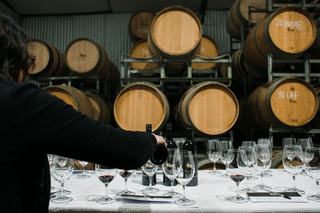
Tasting in Alsace is less formal than in Bordeaux or Burgundy. Most domaines along the route are family businesses with a tasting room on the village street, and many welcome walk-in visitors during opening hours without an appointment. A tasting usually runs through the range from dry whites to sweeter styles, with a grand cru or a late-harvest wine poured at the end for those who show interest.
A few habits make a visit smoother. Arrive outside the lunch break, which in rural Alsace can last two hours; say which grapes interest you rather than tasting everything; and, if the visit was free and long, buying a bottle or two is the polite way to thank the winemaker. Larger houses and cooperatives offer cellar tours on fixed schedules, while small estates often prefer a phone call the day before, especially during harvest.
Practical points before driving the Route des Vins
How long does it take to drive the Alsace wine route?
Driving the Alsace wine route without stopping takes about four hours, but nobody does it that way. Allow a full outing for the central section alone and three days for the whole drive with tastings and walks.
Can you visit the Alsace wine route without a car?
Yes, the Alsace wine route can be explored without a car. Regional trains serve Obernai, Barr, Sélestat and Colmar, local buses link Colmar to the nearby wine villages, and the Véloroute du Vignoble connects them by bike.
Which is the best village on the Alsace wine route?
The best village on the Alsace wine route depends on the trip: Riquewihr and Eguisheim are the most picturesque villages, Kaysersberg combines history and strong winemakers, and Mittelbergheim or Gueberschwihr offer quieter visits away from the crowds.