
Wine tasting courses in France run from a two-hour class in a city wine school to a full day among the vines, and up to professional training that ends with an exam. Most schools offer sessions in English, and the lesson is applied oenology: read the colour, the nose and the structure, then link each glass to a French region and its grape varieties.
- Short format
- A two-hour or half-day workshop at a regional wine school, ideal on a trip.
- Long format
- WSET levels, the Bordeaux university tasting diploma or the national oenology degree, for a career in the wine trade.
- The deciding factor
- Your level and your language, more than the region.
What a French wine course teaches in practice
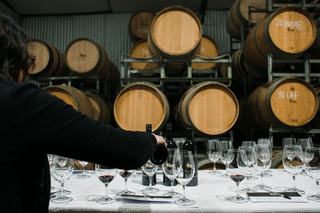
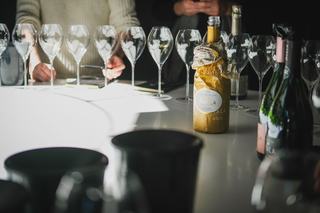
A French wine course follows the same sensory method whatever the school: sight, nose, palate, then a conclusion on quality and origin. The instructor pours a series of wines, usually six to ten in an introductory class, and asks you to describe them with a shared vocabulary before revealing what is in the glass. That discipline is the real skill you take home, because it works on any bottle afterwards.
Beyond sensory analysis, most programmes cover three blocks of knowledge. The first is grape varieties: cabernet sauvignon and merlot in Bordeaux, pinot noir and chardonnay in Burgundy, chenin blanc and cabernet franc in the Loire, riesling and gewurztraminer in Alsace. The second is wine production, from the vineyard calendar to fermentation, oak ageing and the method used for sparkling wine. The third is food and wine pairing, which many schools teach with cheese or regional dishes on the table.
Blind tasting appears in most intermediate workshops. Covering the labels forces you to reason from what you perceive rather than from a reputation, and it is the exercise that shows the fastest progress over a single day. Sommeliers train the same way, which is why many workshops are led by a working sommelier or a technical expert from a chateau rather than a teacher.
Course formats compared
French wine schools organise their offer around a few standard formats. The table compares them by length, audience and outcome.
| Format | Usual length | Best suited to | What you leave with |
|---|---|---|---|
| Introductory workshop | About two hours | Visitors and beginners | The method and a first map of the region |
| Themed masterclass | Half a day | Amateurs with some experience | Depth on one appellation, vintage or style |
| Full-day class with a visit | One day | Enthusiasts on a wine holiday | Classroom work tied to a vineyard and cellar |
| Certified programme (WSET) | One to several days per level, plus an exam | Future wine trade staff and serious amateurs | An internationally recognised certificate |
| University diploma | An academic year or longer | Professionals, French speakers | A national qualification |
Where to find a wine school in each region
Regional wine schools in France are often run by the interprofessional body of the appellation, which keeps the teaching close to the local wines and neutral between estates.
Bordeaux and the south west
The Ecole du Vin de Bordeaux, run by the Bordeaux wine council (CIVB) in the Maison du Vin in the city centre, offers short workshops and longer courses at several levels, many of them in English. It is a practical first step before visiting the Médoc or Saint-Emilion, and a city base helps: the choice of a base for a Bordeaux wine stay decides how easily you combine a class with estate visits. Further south west, Cahors and Gaillac estates run more informal sessions at the property.
The Rhone valley and Alsace
In the Rhone valley, estates around Tain-l'Hermitage and Châteauneuf-du-Pape run workshops on syrah, grenache and the role of terroir, often with a week-long program in high season. Alsace producers along the wine route teach the difference between dry and late-harvest riesling, with gourmet pairings of local cheese and choucroute.
Burgundy, Champagne and the Loire
In Beaune, the Ecole des Vins de Bourgogne belongs to the Burgundy wine board (BIVB) and teaches the hierarchy of the region, from regional appellations to village, Premier Cru and Grand Cru wines. Private schools in Beaune and Dijon add workshops on the climats of the Côte d'Or. In Champagne, houses build structured tasting into the cellar visit, comparing non-vintage blends with vintage releases. The Loire, with its long chain of appellations, suits a course that travels between Sancerre, Vouvray and Muscadet styles.
Paris and the cities
Paris has the widest choice of wine classes, from neighbourhood wine bars that run evening sessions to cookery schools such as Le Cordon Bleu, which teaches wine alongside cuisine. The advantage is the range of regions on one table; the trade-off is the absence of vines.
Which wine qualifications are recognised?
The Wine & Spirit Education Trust, a London-based body founded in 1969, sets the most widely recognised wine qualifications. Its wine programme has four levels, from Level 1 for beginners to the Level 4 Diploma, and approved providers in France teach it in English and French. Each level ends with an exam, and the certificate is understood by employers in the wine trade worldwide.
France has its own academic route. The University of Bordeaux, through its Institute of Vine and Wine Science (ISVV), awards the DUAD, a university diploma in wine tasting aptitude, taught in French over an academic year. The Diplôme National d'Œnologue is the national degree for winemakers, a scientific training at university level rather than a course for amateurs. Both require a solid level of French.
For a professional goal, check that the school is an approved provider before you enrol, since only those can register candidates for the official exams. Ask the school to send the programme and contact details of the exam centre in advance.
How long should a wine course last?
A two-hour class is enough to learn the method and discover one region, which is why it fits so well into a holiday. A full day adds a vineyard walk and a cellar visit, so the link between soil, climate and the wine in your glass becomes concrete. Beginners who want a lasting result usually gain more from two separate days a few weeks apart than from one long session, because the palate needs time to settle what it has learned.
Weekend wine classes and short wine courses spread over several evenings, or one evening a week for a month, suit residents who want to improve step by step. Certified levels need more time: the higher WSET levels add home study to the classroom days, and the university diplomas run over a full academic year.
Choosing a course for your level and language
A beginner should look for a course that covers French wine geography and the main grape varieties before going deep on any one appellation. Someone with experience will learn more from a themed masterclass, such as a vertical of one estate or a comparison of Burgundy villages. Advanced learners often prefer a multi-day immersion with winemaker meetings and barrel samples.
Language matters as much as level. Courses in English are common in Bordeaux, Beaune, Champagne and Paris, less so in smaller regions, where a bilingual guide fills the gap. A guided wine tour in France can include a short class at the first estate, which helps when no school runs sessions in your language nearby. Group size also changes the experience: under a dozen people, the instructor can correct each person's notes.
Turning a course into the first day of a wine trip
The best moment for a wine class is the start of a trip, not the end. Learning the method on the first day changes every visit that follows: you ask the producer better questions, you notice the difference between two plots, and you buy with more confidence. Many visitors pair the class with a museum on the history of the region; the wine museums of France, from Bordeaux to Beaune, complete the classroom with the story of the trade.
Book the course before the estates, since popular schools fill their English sessions weeks ahead in summer and during the harvest. Accommodation close to the vineyards, a chateau guest room or a gîte, also saves driving after a workshop where you have sipped a dozen wines. Then plan the visits around what the instructor recommends, a habit that turns a few days of tourism into real wine knowledge.