Most Bordeaux vineyards open their cellars by appointment only, so a Bordeaux wine tour starts with a booking rather than a road map. Around the city of Bordeaux, each Médoc château, the Saint-Émilion grand cru hillsides and the Graves wineries reward a different kind of visit across the region.
- Two banks, two wine styles
- The Left Bank of the Gironde estuary (Médoc, Graves, Sauternes) leans on Cabernet Sauvignon; the Right Bank (Saint-Émilion, Pomerol, Fronsac) on Merlot.
- Book every château visit
- Classified Bordeaux estates rarely accept walk-ins; plan two or three visits a day, never more.
- No car needed for a first trip
- The train reaches Saint-Émilion and Libourne, the tram reaches Pessac-Léognan, and guided wine tours cover the Médoc.
Where the Bordeaux vineyards lie: two rivers, one estuary
The Bordeaux vineyards cover the Gironde department in south-western France, spread around two rivers that meet north of the city of Bordeaux to form the Gironde estuary. The Garonne flows up from the Pyrenees, the Dordogne comes down from the Massif Central, and the two join at the Bec d'Ambès. That geography explains almost everything a visitor sees: soils, grape varieties, the look of the estates and even the way tastings are run. The Bordeaux wine region is usually described as a set of "banks" and the land between them, and wine lovers who learn that map before they book save hours of driving.
The region counts around sixty appellations, from the broad Bordeaux AOC and Bordeaux Supérieur, which can be produced almost anywhere in the Gironde, to tiny village appellations such as Pomerol or Saint-Julien. A single day rarely covers more than one zone comfortably, because the Médoc peninsula alone stretches some eighty kilometres along the estuary.
The Left Bank: Médoc, Graves and Sauternes
The Left Bank runs along the western side of the Garonne and the Gironde estuary. North of the city, the Médoc holds the famous communal appellations of Margaux, Saint-Julien, Pauillac and Saint-Estèphe, strung along the D2 road that locals call the Route des Châteaux. Deep gravel beds drain well and warm quickly, which suits Cabernet Sauvignon, the dominant grape of most Médoc blends. South of Bordeaux, the Graves takes its name from the same gravel; its northern part, Pessac-Léognan, sits partly inside the suburbs of the city. Further south still, Sauternes and Barsac produce sweet white wines from grapes touched by noble rot, helped by autumn mists from the little Ciron river.
The Right Bank: Saint-Émilion, Pomerol and Fronsac
The Right Bank lies east of the Dordogne, around the river port of Libourne. Saint-Émilion is the best known: a medieval village on a limestone plateau, surrounded by vines that UNESCO listed as the Jurisdiction of Saint-Émilion in 1999. Next door, Pomerol is a small plateau of clay and gravel with no grand architecture, where some of the most sought-after Bordeaux wines come from modest farmhouses. Fronsac, Lalande-de-Pomerol and the Castillon and Francs côtes complete the Right Bank. Clay and limestone keep the soil cooler, and Merlot, with Cabernet Franc in support, dominates the blends.
Entre-Deux-Mers and the côtes
Between the Garonne and the Dordogne, the rolling Entre-Deux-Mers ("between two seas", in fact two tidal rivers) is the largest zone by area. It is known for dry white wine based on Sauvignon Blanc and Sémillon, but much of the red Bordeaux and Bordeaux Supérieur sold under the regional appellations also comes from here. North of the Dordogne, Blaye and Bourg face the Médoc across the estuary. These areas see fewer coaches, and a family château is more likely to welcome visitors without weeks of notice.
| Zone | Bank | Main grape | What a visit looks like |
|---|---|---|---|
| Médoc (Margaux, Saint-Julien, Pauillac, Saint-Estèphe) | Left | Cabernet Sauvignon | Grand château architecture, formal tour and tasting, booking weeks ahead |
| Pessac-Léognan and Graves | Left | Cabernet Sauvignon, Sauvignon Blanc | Red and white wines side by side, estates close to the city |
| Sauternes and Barsac | Left | Sémillon | Sweet wine cellars, explanation of noble rot and hand picking |
| Saint-Émilion and Pomerol | Right | Merlot, Cabernet Franc | Limestone cellars, village on foot, many small estates |
| Entre-Deux-Mers, Blaye, Bourg | Between and north | Merlot, Sauvignon Blanc | Family estates, relaxed visits, fewer crowds |
Which grape varieties grow in Bordeaux?
Bordeaux grape varieties fall into two short lists. For red wine, the permitted varieties are Merlot, Cabernet Sauvignon, Cabernet Franc, Petit Verdot, Malbec (locally called Côt) and Carménère. For white wines, they are Sémillon, Sauvignon Blanc and Muscadelle, with a few minor varieties allowed in small proportions. Merlot is the most planted grape across the Bordeaux vineyards, because it ripens earlier and copes with the cooler clay soils of the Right Bank and Entre-Deux-Mers. Cabernet Sauvignon covers a smaller share of the region but gives the long-lived Médoc reds their structure.
Almost every red Bordeaux is a blend. A Pauillac estate might use a majority of Cabernet Sauvignon with Merlot and a touch of Petit Verdot; a Saint-Émilion grand cru often reverses the proportions, with Merlot first and Cabernet Franc second. Guides at the château usually explain the blend of the current vintage during the tasting, and asking how it changed from one year to the next is one of the most useful questions a visitor can put to them.
The list is not frozen. In 2021 the French appellation authority approved a small set of new varieties for trial use in Bordeaux AOC and Bordeaux Supérieur, including Marselan, Touriga Nacional, Arinarnoa and Castets for red wine, and Alvarinho and Liliorila for white wine, capped at a small share of the vineyard and of the blend. The aim is to adapt the wine production of the region to hotter, drier summers. Few visitors will taste them yet, but some estates in the Entre-Deux-Mers now show these vines during their tours, which makes for a unique wine tasting angle on climate change.
Reading a Bordeaux label before the cellar visit
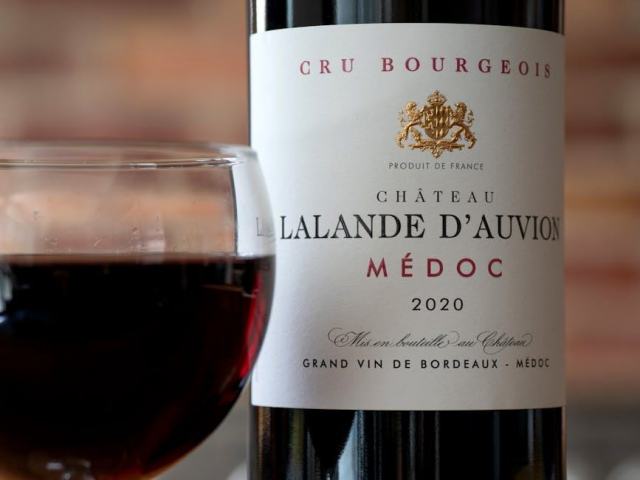
A Bordeaux label tells a visitor where the wine comes from and how high it sits in the local hierarchy, and decoding it before the visit makes every tasting easier to follow. The broadest level is the regional appellation: Bordeaux AOC and Bordeaux Supérieur cover red, white and rosé wines grown almost anywhere in the Gironde, with stricter yields and longer ageing for Bordeaux Supérieur. Next come the zone appellations, such as Médoc, Haut-Médoc, Graves or Entre-Deux-Mers. Since 2009, Blaye, Cadillac, Castillon and Francs have shared a single Côtes de Bordeaux appellation, each adding its own name on the label. At the top sit the village appellations, Margaux, Pauillac, Pomerol or Saint-Émilion grand cru, which name a single commune or a small group of communes.
Cru classé, cru bourgeois and grand cru
The word "cru" means a growth, and on a Bordeaux label it signals a classification rather than a legal grade of quality. "Grand cru classé en 1855" marks one of the Médoc, Graves or Sauternes wines ranked for the Paris exhibition. In the Médoc, the Cru Bourgeois classification, relaunched in 2020 with three tiers and revised every five years, covers several hundred other wineries. On the Right Bank, "Saint-Émilion grand cru" is an appellation, while "grand cru classé" and "premier grand cru classé" refer to the separate Saint-Émilion classification. Pomerol has no classification at all, which surprises many first-time Bordeaux visitors. Knowing these terms helps put a château visit in perspective: a cru bourgeois from Listrac or Moulis may give a more relaxed experience than a cru classé down the road, at a fraction of the bottle price.
Organic and sustainable labels in the Bordeaux vineyard
Many Bordeaux wineries now show an organic or sustainable farming logo next to the appellation. The European organic leaf certifies organic grape growing and winemaking; the French HVE label (Haute Valeur Environnementale) rewards sustainable practices across the farm; and a smaller group of Bordeaux producers follows biodynamic methods, certified by Demeter or Biodyvin. The interprofessional council of Bordeaux wines has made environmental certification a priority for the whole Bordeaux vineyard, and the share of certified surfaces has grown fast over the past decade. During a cellar visit, asking how the vineyard is farmed, whether herbicides are still used, and how the château handles spring frost or mildew, often leads to the most interesting part of the tour. It also tells a visitor a lot about the spirit of the place, beyond the label.
The Bordeaux wine route signs
Brown road signs mark the official wine routes of the Gironde, and following them is a simple way to discover a Bordeaux appellation by car or bicycle. The best known is the Route des Châteaux along the D2 in the Médoc, but the Saint-Émilion, Entre-Deux-Mers, Graves and Sauternes routes each have their own signposted loops. The local Maison du Vin in each appellation hands out maps that show which wineries welcome visitors, their opening days and whether a booking is needed. These maps are often more up to date than travel apps, because the Bordeaux syndicates collect them directly from their members each season.
Which Bordeaux vineyards are worth visiting first?
The best Bordeaux vineyards to visit depend less on fame than on what a visitor wants to understand. A first-time wine tour benefits from contrast: one classified Médoc château for the scale and history, one Right Bank estate for the limestone cellars, and one smaller family property for an unhurried conversation. The appellations below are the usual starting points, with an idea of what each one teaches.
Médoc châteaux and the 1855 classification
The Médoc is where the 1855 classification of Bordeaux wines still shapes the landscape. Drawn up by the wine brokers of the city for the Universal Exhibition in Paris, it ranked 61 red wines, all from the Médoc except Château Haut-Brion in the Graves, into five tiers of "growths". The only significant change came in 1973, when Château Mouton Rothschild moved up to first growth. Driving the D2 from Margaux to Saint-Estèphe, a visitor passes many of these names in turn: Château Margaux, then the estates of Saint-Julien, then Château Latour, Château Lafite Rothschild and Mouton Rothschild around Pauillac, then the pagoda-roofed Cos d'Estournel at the entrance to Saint-Estèphe. Several classified growths now run structured visits with a modern cellar, a barrel room and a seated tasting. Each Médoc château sets its own rules, and the most famous names take only a limited number of visitors each day.
Saint-Émilion grand cru estates
Saint-Émilion offers the most compact wine tourism experience in Bordeaux. The village itself sits on a network of quarries from which the limestone of its houses was cut, and many cellars run directly under the vines. The Saint-Émilion grand cru appellation has its own classification, first published in 1955 and revised roughly every ten years; the latest edition, in 2022, was marked by the withdrawal of several of its most famous estates. Visitors can combine a tour of the monolithic church, carved into the rock, with two estate visits on foot or by bicycle. The tourist office of Saint-Émilion also sells guided tours of the underground heritage, which sets the wine in its historical context.
Pessac-Léognan, at the edge of the city
Pessac-Léognan, an appellation created in 1987, is the only place where a first growth sits within the city limits of a large town: Château Haut-Brion, in Pessac, is surrounded by houses and roads. The estates of this appellation produce both red and white wines, which makes a tasting here a good way to compare Sauvignon Blanc and Sémillon whites with Cabernet-led reds in one sitting. Further south, the forested Léognan area hosts estates with gardens, hotels and restaurants, often open on more days of the week than the Médoc.
Sauternes and Barsac
Sauternes and Barsac are the place to understand sweet wine. The 1855 classification also ranked these estates, with Château d'Yquem alone as "superior first growth". Château Guiraud, a first growth of Sauternes, farms its vineyard organically and receives visitors for tours of its vines and cellars. A visit in October, when pickers pass through the same rows several times to select botrytised grapes one by one, shows why these wines are rare and why their production varies so much from one vintage to the next.
Smaller family estates on the côtes
The Côtes de Bourg, Blaye, Castillon and Francs côtes are where many wine lovers find the best wineries in Bordeaux for a personal visit. The owner often leads the tour, the tasting takes place in the cellar rather than a reception room, and questions about pruning, organic conversion or the wine industry crisis get frank answers. These estates sell a large share of their wine at the cellar door, so visitors are welcome without much notice, especially outside the summer peak.
How to plan a Bordeaux wine tour
A Bordeaux wine tour works best when it is planned around appointments, distances and opening days rather than a list of famous names. Classified châteaux open by appointment; many of them close at weekends and some close in August or during the harvest. The first step is to choose one zone per day, then contact estates two or three weeks ahead for the summer, more for the first growths. The rules for booking a French winery visit apply fully here: confirm the language of the tour, the time, the length and the number of wines tasted.
Two or three visits a day is a realistic rhythm. A classic château tour and tasting lasts between one hour and ninety minutes, and the drive between two Médoc villages adds thirty minutes or more. Lunch matters too: village restaurants in Pauillac, Saint-Émilion or Margaux fill up quickly in season, and many estates close their doors at midday. A typical day might pair a morning visit at a classified growth with an afternoon at a smaller estate in the same appellation, leaving time to stop at the Maison du Vin of the village, where the local syndicate displays the wines of its members.
Fees vary widely, from modest at a cooperative cellar to high at a first growth that includes older vintages. What raises the fee is usually the number of wines poured, the presence of an older vintage, a food pairing or a private guide, not the fame of the label alone. Several estates also offer short visits for a lower fee and longer "premium" visits with a tasting of the first and second wines.
Guided wine tours or self-drive?
Guided wine tours solve the two hardest problems of a Bordeaux trip: booking and driving. Half-day and full-day tours leave the city of Bordeaux for the Médoc, Saint-Émilion or Sauternes in small minibuses, with visits already confirmed. The trade-off is less freedom in choosing estates. A guided wine tour in France is also the simplest answer to French drink-driving rules, since nobody in the group needs to count glasses. Self-drive suits visitors who know which estates they want and are ready to spit at each tasting.
Visiting Bordeaux wineries without a car
Visiting Bordeaux wineries without a car is easier than in most French wine regions, because the city sits in the middle of its vineyard and the regional rail network serves the Right Bank. The best transportation options in Bordeaux depend on the zone. Saint-Émilion has its own station on the line from Bordeaux Saint-Jean towards Bergerac; trains are infrequent, but the journey takes well under an hour and the village lies about two kilometres from the platform, uphill. Libourne, a few minutes earlier on the line, is a short taxi ride from Pomerol estates. On the Left Bank, the tram network of Bordeaux reaches Pessac and Talence, where several Pessac-Léognan estates lie within walking distance of a stop.
The Médoc and Sauternes are harder. Buses exist but run rarely, and the estates are spread over long distances, so a day tour from the city or a private driver is the practical choice. Cyclists can follow the Roger Lapébie greenway, a former railway line turned cycle path that runs from the outskirts of Bordeaux through the Entre-Deux-Mers, passing several wine villages on the way.
| Getting there from Bordeaux | Best for | Limits |
|---|---|---|
| Regional train | Saint-Émilion village, Libourne and Pomerol | Few trains a day, walk or taxi from the station |
| City tram | Pessac-Léognan estates in Pessac and Talence | Only the northern part of the appellation |
| Guided day tour | Médoc, Sauternes, first trip to the region | Estates chosen by the operator |
| Bicycle or e-bike | Entre-Deux-Mers greenway, Saint-Émilion plateau | Summer heat, hills around the village |
| Private driver | Custom visits in several appellations | Highest budget of the options |
Booking, weekends and tasting etiquette at Bordeaux châteaux
Can you visit a Bordeaux château without an appointment?
A Bordeaux château rarely accepts visitors without an appointment, and the classified growths of the Médoc almost never do. Some Saint-Émilion estates and many cooperatives on the côtes keep a tasting room open during the day, especially from spring to autumn.
Are Bordeaux vineyards open on Sundays?
Many Bordeaux vineyards close on Sundays and some on Saturdays too, above all in the Médoc. Saint-Émilion, Pessac-Léognan and estates with a restaurant or hotel are the most likely to receive visitors at weekends.
Is it rude to spit during a tasting in Bordeaux?
Spitting during a tasting in Bordeaux is normal and expected; every tasting room provides a spittoon. Professionals spit, and visitors who drive or plan several visits in a day should do the same.
Can children come on a château visit?
Children can join most château visits, which are walking tours through vines and cellars; the tasting is for adults only. A few Bordeaux estates offer grape juice tastings or games for younger visitors, which is worth asking about when booking.
Tasting experiences beyond the classic cellar tour
Wine tasting experiences in Bordeaux now go well beyond the classic walk from vat room to barrel cellar. Many estates run blending workshops, where visitors taste each variety separately, then assemble their own blend in measuring cylinders and compare it with the blend the château chose. These tasting workshops are the most direct way to understand why a Médoc red and a Saint-Émilion red taste so different even in the same vintage.
In the city, the École du Vin de Bordeaux, run by the interprofessional council of Bordeaux wines, offers short introductory courses in English and French, a good first step before a day in the vineyards. La Cité du Vin, opened in 2016 on the banks of the Garonne, is a museum of wine cultures from around the world; its ticket includes a glass at the belvedere on the top floor, with a view over the city of Bordeaux. Other unique wine tasting formats include visits on horseback or by e-bike through the vines, food and wine pairings with cheese or chocolate, and harvest days in September where visitors pick a few rows before lunch with the team.
The quality of a tasting experience rarely depends on its price. Visitors get the most from a session by asking the guide about the soils, the vintage conditions and the choice of oak, and by tasting in order from white wines to red, then to sweet wines if the estate makes them.
A short history of Bordeaux vineyards
The history of Bordeaux vineyards begins with the Romans, who planted vines around Burdigala, the Roman name of Bordeaux, in the first century. The decisive turn came in 1152, when Eleanor of Aquitaine married Henry Plantagenet, the future King Henry II of England. For three centuries Bordeaux belonged to the English crown, and its light red wine, which the English called claret, shipped down the Garonne to London in huge quantities. The Bordeaux wine heritage still bears the mark of that trade: the merchant houses on the quays of the Chartrons district, many founded by British, Irish, Dutch and German families.
In the seventeenth century, Dutch engineers drained the marshes of the Médoc, revealing the gravel banks where the great estates would later stand. The 1855 classification fixed a hierarchy that still drives the market. Then phylloxera, a vine pest from North America, destroyed most of the vineyard in the late nineteenth century; growers replanted on American rootstocks, as they did everywhere in France. The appellation system arrived in the 1930s and set rules on grape varieties, yields and boundaries. Today, Bordeaux wines face a new test: falling demand for red wine has led the region to grub up thousands of hectares of vines since 2023, with public support, while estates invest in organic farming, new varieties and wine tourism to stay open.
When to visit Bordeaux vineyards
Bordeaux vineyards can be visited all year, but each season shows a different side of the work. Spring, from April to June, brings budding and flowering vines, mild weather and easier appointments; it is also the season of the en primeur tastings in early April, when the trade descends on the region and some estates close to the public for a week. Summer is the high season for wine tourism, with the longest opening hours and the hardest bookings, especially in August. The harvest usually starts in early to mid September for white grapes and runs into October for Cabernet Sauvignon, with Sauternes picked last. A harvest experience in the vines is possible at some estates, though the busiest châteaux cut back visits during picking. Winter is quiet, cold and grey, but the few estates that stay open give long, personal visits, and pruning is under way.
Weather matters for cyclists and walkers: July and August often bring days above thirty degrees on the Saint-Émilion plateau, and the Médoc has little shade along the estuary.
Where to base yourself for a vineyard trip
The city of Bordeaux is the obvious base for a first visit: all the zones lie within an hour, trains leave for Saint-Émilion, and day tours start from the centre. Staying in a vineyard changes the experience, though. Saint-Émilion and its surroundings suit visitors without a car, Pauillac and Margaux suit those who want early starts at the classified growths, and Pessac-Léognan offers château hotels close to the airport. Guidance on choosing a base for a Bordeaux wine stay compares these options by budget and mode of transport.
Whatever the base, the drive back after a tasting deserves a plan. France sets the legal limit at 0.5 grams of alcohol per litre of blood, and 0.2 for new drivers, and the drink-driving limit for wine tourists in France is applied with frequent roadside checks in wine areas. Using the spittoon, sharing the driving or booking a driver keeps a Bordeaux wine tour safe.