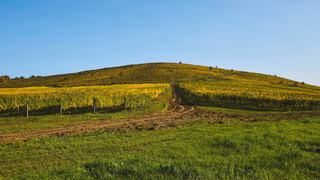

Loire Valley vineyards follow the river from the Atlantic to Sancerre, in the heart of France, and each wine area has a unique style worth a visit. A wine trip can start with Muscadet near Nantes, explore the tufa cave cellars of Saumur, then discover the chateau wine estates of Touraine.
- Where
- The Loire Valley vineyards form four wine areas: Pays Nantais, Anjou-Saumur, Touraine and Centre-Loire, each with its own terroir and taste.
- Map
- The InterLoire appellation map helps explore the wine route of France's longest river and discover a quality vineyard in each area.
- When
- April to October, with May, June and the September harvest as the best months to visit a vineyard for a tasting experience.
- How
- By bike on the Loire à Vélo, by car between wine towns such as Tours, Angers and Saumur, or with a wine guide who books each domaine for you.
Four stretches of river, four wine identities
The Loire Valley wine region is less a single vineyard than a chain of very different ones, strung along the longest river in France. Ocean influence dominates in the west, a cooler continental climate takes over in the east, and soils change from schist and granite near the coast to tufa limestone in the middle Loire and flint and chalk around Sancerre. That gradient explains why a white wine from Nantes tastes nothing like a white wine from Vouvray, even though both come from the same river. Most visitors pick one or two of the four areas below rather than trying to cover the whole valley in a few days.
Wine and heritage go together here. In 2000, UNESCO listed the Val de Loire between Sully-sur-Loire and Chalonnes-sur-Loire as a World Heritage cultural landscape, recognising centuries of history in its towns, castle gardens and vine-covered slopes. Those landscapes are what set a Loire wine trip apart from a cellar-only itinerary: a morning at a chateau and an afternoon at a family wine domaine fit into the same short drive, and the region's administrative name, Centre-Val de Loire, is a reminder of how closely wine and history are tied along the river.
Pays Nantais, the Atlantic Loire
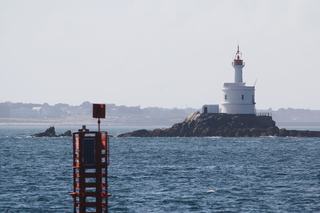
The Pays Nantais, around Nantes, is the home of Muscadet, a dry white made from the Melon de Bourgogne grape. The best producers age it on its lees, which gives a slightly creamy texture and a saline finish that suits oysters and seafood from the nearby Atlantic Ocean. Muscadet Sèvre et Maine is the largest appellation, and the area also has a small number of village-level crus that reward a tasting stop. Wineries here are mostly family estates, often within half an hour of the city centre.
Anjou and Saumur, Chenin Blanc in every style
Anjou and Saumur form the middle Loire's most varied area. Chenin Blanc appears dry in Savennières, sweet in the Coteaux du Layon and sparkling in Saumur, while Cabernet Franc gives the red wines of Saumur Champigny. Anjou also produces rosé wines, including Rosé d'Anjou and Cabernet d'Anjou, which explain why rosé features on so many cellar tasting lists. Angers and Saumur are the natural bases for exploring this part of the Loire.
Anjou's sweet wine country deserves its own wine stop. The Coteaux du Layon, Bonnezeaux and Quarts de Chaume slopes produce elegant late-harvest Chenin when autumn mists allow noble rot, and the Coteaux de l'Aubance and Coteaux de Saumur add smaller, quieter versions. In a good vintage these wines age for decades, and a domaine owner will often open an older bottle to show how a sweet wine evolves. Further north, the Coteaux du Loir and Coteaux du Vendômois grow Pineau d'Aunis, an elegant wine grape rarely seen elsewhere.
Touraine, châteaux and Cabernet Franc
Touraine, centred on Tours, mixes wine with the most famous châteaux of the valley. Vouvray and Montlouis-sur-Loire face each other across the river and share Chenin Blanc; Chinon, Bourgueil and Saint-Nicolas-de-Bourgueil make Cabernet Franc reds; and the wider Touraine appellation adds Sauvignon Blanc and lighter reds. Château de Chenonceau even keeps its own wine cellar, so a chateau visit and a tasting can share the same afternoon, and the medieval castle of Chinon, where Joan of Arc met the future Charles VII, looks over wine slopes with a long history. The local tourism board, ADT Touraine, lists estates open to visitors.
Centre-Loire, the kingdom of Sauvignon Blanc
The Centre-Loire, in the upper Loire towards Orléans and Nevers, belongs to Sauvignon Blanc. Sancerre and Pouilly-Fumé face each other on either bank, with flinty soils that give the wines their smoky edge, while smaller appellations such as Menetou-Salon, Quincy and Reuilly offer quieter cellars. Sancerre also makes red and rosé wines from Pinot Noir, a reminder that Burgundy is not far away. The hilltop village of Sancerre gives one of the finest views over the vineyards of the upper valley.
Which grape varieties define the Loire Valley?
Loire Valley grape varieties are few but versatile, and five of them carry most of the region's wine production. Knowing them in advance makes every cellar tasting easier to follow, because Loire labels usually name the appellation rather than the grape.
- Chenin Blanc: the signature white grape of Anjou and Touraine, made dry, off-dry, sweet or sparkling depending on the year and the producer.
- Sauvignon Blanc: the grape of Sancerre, Pouilly-Fumé and much of Touraine, with citrus and mineral notes.
- Melon de Bourgogne: the Muscadet grape, grown almost only in the Pays Nantais.
- Cabernet Franc: the main red grape of Chinon, Bourgueil and Saumur Champigny; in Bordeaux it plays a supporting role in blends, while the Loire bottles it on its own as a fresh, fragrant red wine.
- Pinot Noir and Gamay: lighter reds and rosés, mainly in the Centre-Loire and Touraine.
Rarer varieties are worth asking about at the cellar door. Pineau d'Aunis, a peppery red grape grown around the Loir valley and in Touraine, is a local curiosity, and some estates also plant Cabernet Sauvignon or Grolleau for blends and rosé. This diversity, more than any single famous name, is what makes the Loire unique among French wine regions: a short drive changes the grape, the soil and the style in the glass.
Saumur's tufa cellars and sparkling Loire wine
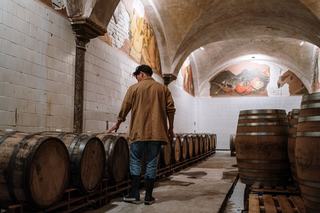
Saumur's wine cellars are carved into tufa, the soft white limestone quarried for centuries to build the châteaux of the valley. The quarrying left kilometres of galleries in the hillsides, and their stable, cool temperature suits ageing bottles. Several sparkling wine houses open these galleries to visitors and explain how Crémant de Loire and Saumur Brut are made by the traditional method, with a second fermentation in the bottle. Houses such as Bouvet-Ladubay, Ackerman and Gratien & Meyer are among the best known.
The tufa landscape goes beyond wine. Troglodyte villages around Saumur still have homes, chapels and restaurants cut into the rock, and Château de Brézé, south of the town, combines a vineyard with an underground fortress. Vouvray and Montlouis, in Touraine, also store their sparkling wine and still Chenin Blanc in rock cellars, so the same experience continues further upstream. For a first trip, one sparkling house in Saumur and one small family winery in the Saumur Champigny hills give a good contrast between large production and craft scale.
Choosing wineries to visit along the Loire wine route
The wineries in Loire Valley range from cooperatives and large négociant houses to a family domaine working a few hectares, and the best wineries to visit are not always the most famous. Unlike Bordeaux, where many chateau estates require an appointment weeks ahead, much of the Loire keeps a simple farm welcome, and a wine visit can be arranged the day before. Large houses and cooperatives usually welcome walk-in visitors during opening hours. Small domaines, by contrast, often work in their vines and cellars and prefer a phone call or an email a day or two beforehand. A growing number of organic and biodynamic producers also welcome visitors, especially in Anjou and the Centre-Loire.
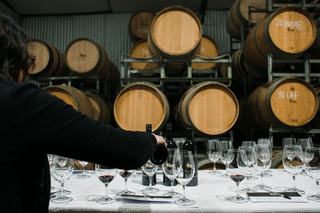
A practical way to plan is to follow the appellation map published on vinsdeloire.fr, the site of the InterLoire trade body, and to choose three or four wineries per day at most. Tastings are often modestly priced or credited against a purchase, and most visits last between thirty minutes and an hour. Visitors who would rather not drive between cellars can book a guided wine tour in France, which handles transport and appointments with the estates. A good wine tasting tour in the Loire should mix one well-known name with smaller producers, so that the day shows the full range of quality and styles. A local guide also helps with the less obvious wine cave cellars, such as a troglodyte domaine near Saumur, that rarely appear on a Bordeaux-style itinerary built around big names.
Cycling the vineyards on the Loire à Vélo
The Loire à Vélo is a signposted cycle route of about 900 kilometres that follows the river through the vineyards to the Atlantic, and it is the most relaxed way to discover the Loire Valley wine region. The route is mostly flat, runs on quiet roads and dedicated paths, and passes towns, châteaux and cellars at short intervals. The section between Blois and Saumur is the busiest with wine lovers, as it links Touraine and Saumur in a few easy days of riding.
Most cellar doors welcome cyclists, and many estates along the route offer bike parking and sometimes guest rooms. Luggage transfer services let riders carry only a day bag, which leaves room in the panniers for a few bottles. The routes and pace of cycling wine tours differ from one French region to another, and the Loire is one of the gentlest options for riders who want to taste rather than train.
Timing, maps and bookings for a Loire wine trip
When is the best time to visit Loire Valley vineyards?
The best time to visit Loire Valley vineyards runs from April to October. May and June bring mild weather, flowering vines and fewer tourists, while late September and October cover the harvest, when Chenin Blanc in Anjou and Touraine is often picked in successive passes to select grapes affected by noble rot for sweet wines.
Do you need to book winery visits in the Loire?
Booking winery visits in the Loire is recommended for small family estates, which may be out in the vines without notice. Large sparkling houses in Saumur and cooperatives usually take visitors without an appointment during opening hours, although guided cellar tours can fill up in summer.
Where to find a map of the Loire Valley wine regions?
A map of the Loire Valley wine regions is available on vinsdeloire.fr, run by InterLoire, the trade body for Loire wine, and local tourist offices in Nantes, Angers, Saumur, Tours and Sancerre hand out printed maps of their wine routes. Cycling maps of the Loire à Vélo also mark the towns with wine cellars along the river.
Where to stay and how far the Loire is from Paris
Tours, Angers, Saumur and Blois are the most convenient bases for a Loire wine trip, with train connections, restaurants that pair local wines with Loire cuisine, and easy access to several appellations. Staying in a smaller village such as Chinon, Vouvray or Sancerre brings visitors closer to the vineyards and makes evening tastings easier. Estates that welcome guests add a lot to the experience, and the château and estate stays across French wine regions include several options in Touraine and Anjou.
The Loire is also one of the wine regions closest to Paris. High-speed trains reach Tours in around an hour, which makes Vouvray or Chinon possible without a night away, while Sancerre is reachable by car in a little over two hours. Travellers weighing a day trip from Paris to Champagne, the Loire or Burgundy will find that the Loire suits those who want châteaux and wine on the same day.
Reading Loire terroir in the glass
Loire terroir is easiest to understand by tasting the same grape on different soils, an approach few visitors try but most cellars are happy to support. Chenin Blanc from the schist of Savennières tends to be firm and austere when young, while Chenin from the tufa of Vouvray is rounder and more aromatic. Sauvignon Blanc changes in the same way between the flint, the chalk and the clay-limestone of Sancerre, and many producers bottle these parcels separately so visitors can compare them side by side.
Cabernet Franc shows the contrast in red wine. Gravel and sand near the river give lighter, fruity Chinon and Bourgueil for early drinking, while the tufa slopes produce more structured wines that age for years. Asking a winemaker which plot a wine comes from usually opens the most interesting conversation of the day, and it turns a simple tasting into a lesson in how place shapes taste. Each estate, from the smallest domaine to the largest wine house, has its own way of explaining the appellations it farms, and that diversity is what keeps the Loire unique. For travellers who already know the classic names, this terroir-led approach is the best reason to return to the Loire for a second trip.