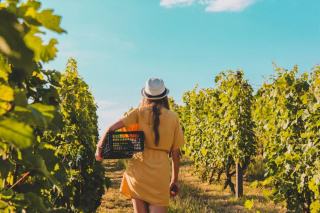
Jura wine tourism means visiting France's smallest classic wine region: 2 000 hectares of vineyard between Burgundy and Switzerland, where savagnin and oxidative ageing produce vin jaune. Arbois, Poligny and Chateau-Chalon lie twenty kilometres apart, close enough to discover three appellations, tour several wineries and taste at a different domaine each day.
At a glance
- Four appellations in an 80 km strip: Arbois, Chateau-Chalon, L'Etoile and Cotes du Jura.
- Vin jaune ages six years and three months under a veil of yeast, then fills a 62 cl clavelin.
- Wineries are small family estates: book a cellar tasting with the producer, never arrive unannounced.
- Local food pairing is Comte cheese, and every village restaurant serves it with the local wine.
- Discover Savoie two hours south, a mountain vineyard growing entirely different grape varieties.
What makes Jura wine unlike anything else in France
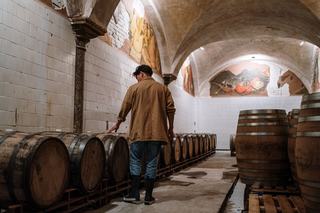
The Jura vineyard produces wine that tastes of somewhere else entirely, and the reason is a technique rather than a grape variety. Barrels are deliberately left unfilled as the wine evaporates, and a film of yeast, the voile, forms on the surface. That veil protects the wine from turning to vinegar while allowing slow oxidation, which gives the region its signature flavours of walnut, curry spice and dried apple.
Vin jaune is the extreme version. Made only from savagnin, it stays in barrel a minimum of six years and three months without topping up. Roughly a third of the volume evaporates, which is why the clavelin holds 62 cl rather than 75 cl: it is what remains of a litre. Chateau-Chalon, the most prestigious appellation of the Jura wine region, produces nothing else, and its winemakers submit every vintage to a tasting panel that can, and occasionally does, declassify it entirely. The appellation rules published by INAO leave little room for shortcuts: the wine must spend at least five years under its veil without topping up, and it cannot be sold to consumers before 1 January of the seventh year after the harvest. A bottle on a shelf has therefore been waiting longer than most visitors expect.
Grape varieties you will not meet in the next region
Only five grapes are authorised, and three are effectively local. Poulsard, written ploussard around Pupillin, gives red wines so pale they can be mistaken for rose. Trousseau is its opposite: darker, firmer, planted on the warmest gravel slopes, and the trousseau of Montigny is its reference. Savagnin is the white that handles the veil. Alongside them grow chardonnay and pinot noir, long established here but shared with neighbouring Burgundy, and both behave very differently on Jura marl.
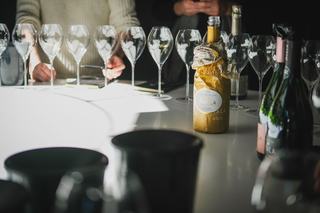
Not every bottle is oxidative, and this trips up first-time visitors. Producers also make ouille wines, topped up in the usual way, which taste taut and mineral. To understand a domaine quickly, ask to taste one chardonnay of each style side by side; most winemakers will happily open both, because the comparison is the clearest thing they can show you.
The four appellations, and what each one covers
The Jura wine region packs an unusual amount of variety into a narrow strip. Two appellations cover a full range of colours and styles, one is a single village, and one is defined by a single wine.
| Appellation | What it produces | Base for a visit |
|---|---|---|
| Arbois | Reds, whites, vin jaune, vin de paille | Arbois town |
| Chateau-Chalon | Vin jaune only | The hilltop village itself |
| L'Etoile | Whites, including vin jaune | Lons-le-Saunier |
| Cotes du Jura | All styles, whole region | Poligny or Voiteur |
Two further names appear on tasting lists everywhere. Cremant du Jura is the sparkling wine, and it accounts for a substantial share of what the region sells. Macvin du Jura is a fortified aperitif, grape juice blended with local marc, sweet and served cold. Vin de paille is the sweet rarity: grapes are dried for weeks before pressing, then aged three years, and a half bottle carries the price of a good burgundy.
Arbois, Poligny and Chateau-Chalon: the wine route on the ground
The signposted Jura wine route runs roughly 80 km from Salins-les-Bains in the north to Saint-Amour in the south. You do not need to drive all of it. The dense stretch, where cellar doors and charming villages follow one another, sits between Arbois and Chateau-Chalon, and that is where most wine lovers spend their time.
Arbois is the obvious base. Recognised in 1936, among the very first French appellations, it is also where Louis Pasteur carried out his work on fermentation: the Maison de Louis Pasteur and his vineyard at Montigny-les-Arsures are both open to visitors, and the connection between this famous town and the science of wine is not a tourist office invention. Enough wineries sit within walking distance that you can taste for a full day without moving the car. Pupillin, twenty minutes uphill, declares itself the world capital of ploussard and has a dozen producers of its own.
Poligny lies fifteen minutes south and calls itself the capital of Comte, a title it owes to the cheese's interprofessional body having its seat here. That is not a marketing line: the cheese maturing cellars are genuinely worth an hour, and they explain the local food pairing better than any tasting note.
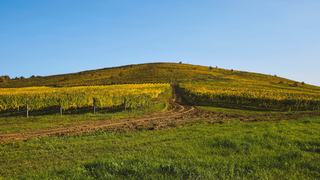
Chateau-Chalon deserves a clear afternoon. The village sits on a rock at the heart of the vineyard, looking out across the plain, and the walk down through the terraces is the finest short vineyard walk in the region. Voiteur and Menetru, immediately below, hold several of the estates that supply it. North of Arbois, Salins-les-Bains adds a different kind of destination: its salt works are a UNESCO world heritage site. Travellers who enjoy a signposted itinerary of this kind should explore the Alsace wine route, which works on the same principle at four times the length.
Booking a cellar visit, and what a tasting costs
Jura estates are small. A domaine here typically farms between five and fifteen hectares, and the person pouring your glass is usually the person who pruned the vines. That has consequences for how you visit: opening hours are working hours, lunch closure is absolute, and Sunday is often nothing at all.
- Contact the producer two or three days ahead, by email or telephone. A weekend in high season deserves more notice.
- Expect a working cave rather than a visitor centre. Several wineries charge a small fee, refunded against a purchase.
- Say early on what you are curious about, whether that is vin jaune, ouille whites or old vine poulsard. The tasting will be built around it.
- The local tourist office in Arbois or Lons-le-Saunier keeps current lists of who opens when, more reliable than a website last updated two seasons ago.
- Guided wine tours exist for visitors without a car, usually running from Arbois or Besancon, and they handle the driving between domaines. Visitors with reduced mobility will find practical advice on step-free cellars and adapted tastings in our page on accessible vineyard visits for everyone.
None of this is unique to the region, but it is applied more strictly here than in Bordeaux or Champagne. Our guide to booking a French winery visit covers the etiquette in detail, including why spitting is expected rather than impolite.
Wine experiences beyond the tasting room
A cellar tasting is the standard experience, but it is not the only one available. The Musee de la Vigne et du Vin at Arbois, housed in the Chateau Pecauld and surrounded by its own vines, explains the ageing process behind vin jaune better than a rushed visit can, and it is the right first stop for anyone who wants context before tasting.
Walking is the region's underrated pleasure. Marked paths cross the vineyard above Chateau-Chalon and around Pupillin, and an hour on foot among the vines does more to explain this terroir than any diagram. Several domaines run guided walks through their own parcels in summer, ending with a tasting in the cave below the house.
Harvest work, blending workshops and cheese and wine sessions with a local producer all exist, but rarely appear on an English language website: ask the tourist office, or the domaine directly. This is a region where an emailed question in plain English is usually answered, and where a passionate winemaker will give you an hour if you have shown genuine interest.
Where to stay in the Jura wine country
Arbois suits most visitors: it is small, walkable, has the widest choice of restaurants, and puts you within half an hour of everything worth visiting. Rooms are limited, so a summer weekend or the February festival needs booking well ahead.
Lons-le-Saunier, at the southern end, is the practical alternative, larger and better connected by train, and it is the natural base for L'Etoile and the southern Cotes du Jura. For a quieter stay, the charming villages between the two, Poligny, Voiteur and Chateau-Chalon itself, hold guest rooms in old winegrowers' houses, several of them run by families who still farm vines. Staying in the vineyard rather than beside it is a genuine part of the experience here, and our guide to wine accommodation in France covers the options across regions.
Food and wine: the pairing that explains the region
Vin jaune with aged Comte cheese is not a tourist invention. The nutty oxidative character of the wine and the crystalline texture of a 24 month cheese come from the same landscape, and tasting them together is the fastest way to understand why the Jura makes wine as it does. Ask for both in any local restaurant and nobody will find the request odd.
The dish to look for is coq au vin jaune et morilles, chicken cooked with vin jaune, cream and morel mushrooms. It appears on almost every gourmet restaurant menu between Arbois and Lons-le-Saunier, the culinary signature of the area, and it uses the wine rather than merely accompanying it. Morbier and the smoked meats of the Jura mountains fill out a traditional board, and Macvin is the customary way to close a meal. For a wider view of how French regions build their food around their bottles, see our overview of wine and gastronomy.
Savoie: the other mountain vineyard, two hours south
Savoie is the natural extension of a Jura trip, and almost nobody combines the two. It covers a similar area, is similarly fragmented across small producers, and grows a completely different set of grapes. Whites dominate: jacquere makes the light, brisk wine served everywhere with fondue, while altesse, sold as Roussette de Savoie, is the more serious white and ages well.
Chignin-Bergeron, made from roussanne on steep south-facing slopes, is the one to seek out, and mondeuse is the red, peppery and firm, increasingly taken seriously outside the area. The vineyards run along the Combe de Savoie between Chambery and Albertville, and around the lake at Bourget, so the scenery does much of the work. Several domaines here look straight at the Alps, which no cellar in the Jura can offer.
Driving between the two regions takes roughly two hours via Bourg-en-Bresse. Splitting a week into three days of Jura and three of Savoie gives you two mountain vineyards, two entirely separate grape families, and a wine travel journey that no packaged tour sells. Travellers heading further south can carry on from Savoie towards Lyon and follow the Rhone Valley vineyards from Lyon to Avignon, where syrah and grenache take over from mountain whites.
When to go, and how to arrive
Late spring and early autumn are the best compromise between open cellars and decent weather. July and August bring more visitors, but also more producers keeping fixed afternoon hours, which makes an unplanned trip easier.
Two dates are worth building a trip around. The Percee du Vin Jaune, on the first weekend of February, moves to a different village each year and opens the new vintage after its six years in barrel; it is the region's biggest celebration, and places to stay go early. Harvest runs from early September into October, and several estates take on visitors who want to pick, which we cover in our guide to wine harvest experiences.
By train, take the TGV to Besancon or Dole, then a regional service to Arbois or Lons-le-Saunier. A car is close to essential once you arrive: the vineyards are rural, the villages are small, and taxis are scarce. If you intend to taste seriously, agree on a driver before you set out.
Questions visitors ask before their first Jura trip
- How many days do you need for the Jura vineyards?
- Three days is enough to visit Arbois, Poligny and Chateau-Chalon properly, with time for two or three cellar visits a day. Two days works if you stay based in Arbois and do not attempt the southern end of the route.
- Is vin jaune the only wine worth trying here?
- No. Vin jaune is the signature, but the region's chardonnay, poulsard and cremant are what most local people drink. Tasting an oxidative and a topped up white side by side tells you more about the Jura than vin jaune alone.
- Can you visit Jura wineries without a car?
- Partly. Arbois has several domaines within walking distance of the centre and is reachable by train, so a car-free stay there is realistic. Reaching Chateau-Chalon or the smaller villages without one is difficult, though guided wine tours fill the gap.
- What does a tasting cost in the Jura?
- Many small estates still pour at no charge, and those that ask for a fee generally set it between five and fifteen euros, refunded if you buy. Structured guided tours covering several domaines cost more.
- When does a new vin jaune vintage reach the market?
- Under the appellation rules, not before 1 January of the seventh year after the harvest. Its release is celebrated at the Percee du Vin Jaune, on the first weekend of February, in a village that changes every year.
- Which village is the best base for wine tourism in the Jura?
- Arbois, for almost every visitor. It has the widest choice of places to stay, the most restaurants, the most producers within reach on foot, and it sits half an hour from both Chateau-Chalon and Salins-les-Bains.