
Stretching from the Rhone delta to the Spanish border, Languedoc-Roussillon is the largest wine region of France, and Languedoc wine tourism rewards visitors who split it by area: Pic Saint-Loup near Montpellier, Saint-Chinian, Limoux, then the vins doux naturels of Roussillon.
Discover the Languedoc wine region in three moves: pick one base per area (Montpellier, Narbonne or Carcassonne, Perpignan for Roussillon), plan two or three cellar visits a day, and pair each wine tour with a site such as the Canal du Midi or Saint-Guilhem-le-Désert. Small family wineries often pour without appointment outside harvest; larger chateaux tend to book ahead.
A vast region of France with a dozen distinct wine landscapes
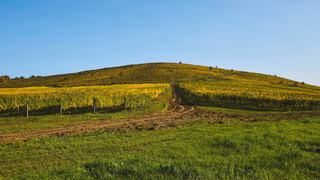
The Languedoc wine region runs in a wide arc along the Mediterranean coast, from the Costières near Nîmes to Banyuls-sur-Mer on the Spanish border, with Roussillon forming its southern, Catalan-speaking end. No other wine region of France covers as much vineyard land, and the soils change every few kilometres: limestone plateaux around Montpellier, blue and grey schist in Faugères and northern Saint-Chinian, clay and pebbles near the coast, and cooler hill sites around Limoux in the foothills of the Pyrenees.
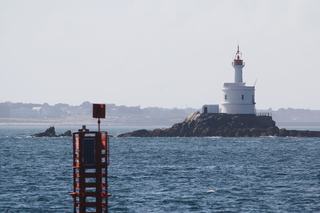
For a visitor, this size is both the appeal and the trap. Wine tourism in Languedoc works best when a trip concentrates on one or two areas rather than trying to cross the whole territory in a weekend: the drive from Pic Saint-Loup to Collioure takes well over two hours. Each area has its own landscape, from the garrigue scrub of the Hérault hills to the terraced schist slopes that drop into the Mediterranean Sea in Roussillon, and its own village rhythm.
The wines follow the same variety. Robust reds dominate in Corbières, Fitou and Minervois, fresher Syrah-led reds in the cooler sites of Pic Saint-Loup and the Terrasses du Larzac, crisp white wine around the Étang de Thau, sparkling wine in Limoux, and fortified sweet wines in Roussillon. Many wineries sell at prices well below those of Bordeaux or Burgundy, which is one reason the region attracts curious drinkers who like to explore French wine without a formal setting. If you prefer someone else to drive and handle the appointments, the choice between a guided wine tour in France or a self-drive route depends mostly on how many wineries you want to see in a day.
Organic farming has spread fast in this dry, windy climate, where the tramontane and the mistral limit fungal disease. A large share of the organic vineyard of France lies in the Languedoc and Roussillon, and many wineries in the countryside now offer walks that explain organic and biodynamic work in the vines, part of the charm of an experience far from the busy wine routes of the north.
Which wine areas should a first trip cover?
A first trip to the Languedoc vineyards usually combines one area of fresh, elegant reds with one area of contrast, such as sparkling Limoux or the sweet wines of Roussillon. The table below sets out the main areas with a base town, the style you will taste and a non-wine stop nearby, so you can build an itinerary of two to four days per base.
| Area | Base town | What you taste | Nearby stop |
|---|---|---|---|
| Pic Saint-Loup | Montpellier | Syrah, Grenache and Mourvèdre reds, fresher than the coast | Hike to the summit, medieval village of Saint-Martin-de-Londres |
| Terrasses du Larzac | Clermont-l'Hérault | Structured reds from high, cool vineyards | Saint-Guilhem-le-Désert, Lac du Salagou |
| Picpoul de Pinet | Sète or Mèze | Crisp, saline white wine | Oyster farms of Bouzigues, Cap d'Agde |
| Faugères and Saint-Chinian | Béziers | Mineral reds from schist, rounder reds from clay-limestone | Fonseranes locks on the Canal du Midi |
| Minervois and Corbières | Narbonne or Carcassonne | Generous Carignan and Grenache reds | Cathar castles, Lagrasse abbey |
| Limoux | Carcassonne | Blanquette de Limoux and Crémant, still Chardonnay | Medieval Cité of Carcassonne |
| Roussillon | Perpignan or Collioure | Côtes du Roussillon reds, Collioure, Banyuls and Maury sweet wines | Coastal path from Collioure to Banyuls-sur-Mer |
Pic Saint-Loup and the hills north of Montpellier
Pic Saint-Loup is the easiest wine area to reach from Montpellier, about half an hour north of the city beneath the limestone peak that gives the appellation its name. Recognised as an appellation in its own right from the 2017 vintage, it produces mostly red wines from Syrah, Grenache and Mourvèdre, and its cooler nights give them a freshness that surprises visitors who expect heavy southern reds.
A day here can start with a morning climb to the summit for the view over the vineyards and the Hortus cliff opposite, followed by two or three cellar visits in villages such as Valflaunès, Lauret or Claret. Wineries range from a family domaine with a tasting room in the farmhouse or an old mas to larger chateaux with a shop and guided walks through the vines. In summer the heat is intense: tastings in the late morning and late afternoon leave the middle of the day for lunch in the shade.
West of Montpellier, the Terrasses du Larzac appellation, recognised in 2014, climbs towards the Larzac plateau around Montpeyroux, Jonquières and Saint-Saturnin-de-Lucian. The vineyards sit higher, the temperature drops quickly after sunset, and the reds keep a tension that suits ageing. Combining a tasting there with a walk in Saint-Guilhem-le-Désert, a village built around the abbey of Gellone and listed by UNESCO as part of the routes to Santiago de Compostela, makes one of the most rewarding days of wine tourism in the whole region.
From Saint-Chinian to Faugères: schist, clay and village cellars
Saint-Chinian and Faugères, in the hills north of Béziers, are where the Languedoc shows how much soil shapes a wine. In the north of Saint-Chinian, around Roquebrun and Berlou, vines grow on schist and the reds turn spicy and mineral; in the south of the appellation, clay and limestone give rounder, fuller wines. Tasting a schist wine and a clay wine from the same grapes, a few kilometres apart, is the best lesson in terroir a visitor can get without a classroom, and several wineries in the Orb valley organise comparative tastings for exactly that purpose.
Faugères is grown almost entirely on schist, in a small cluster of villages such as Caussiniojouls, Cabrerolles and Laurens. Many producers here are small growers who left the local cooperative to bottle their own wine, so a visit often means meeting the person who made it. Calling the day before is the simplest way to avoid a closed gate at lunchtime or during the harvest in September.
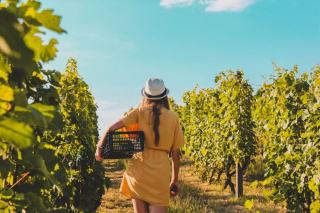
The Orb valley around Roquebrun, sometimes called the little Nice of the Hérault for its mild climate, offers canoeing and a Mediterranean garden. Further south, the nine Fonseranes locks lift the Canal du Midi up towards Béziers, a UNESCO World Heritage site since 1996 and a good place to stretch your legs between two tastings. Several wineries welcome visitors with picnics among the vines in summer, and a few hold night tastings under the stars in July and August, one of the most popular activities in the heart of the season.
Whites, bubbles and the Mediterranean coast
The Languedoc is not only a red wine region. Picpoul de Pinet, grown between the Étang de Thau and the hills, gives a lively, saline white wine that locals drink with the oysters and mussels farmed in the lagoon at Bouzigues and Mèze. The area became a full appellation in 2013, and the cooperative and private cellars around Pinet are used to visitors arriving from the beaches of Sète and Cap d'Agde.
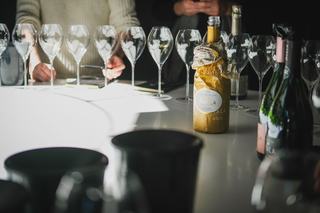
Limoux, south of Carcassonne in the cooler foothills, claims one of the oldest sparkling wine traditions in France: monks at the abbey of Saint-Hilaire are recorded making a sparkling wine in 1531, well before the method spread in Champagne. Blanquette de Limoux is built mainly on the local Mauzac grape, while Crémant de Limoux adds Chardonnay and Chenin Blanc. The town's winter carnival and the Toques et Clochers auction around Easter bring producers out to meet visitors.
Across the region, the IGP Pays d'Oc label, the former vin de pays, covers wines labelled by grape variety, including Cabernet Sauvignon, Sauvignon Blanc and Chardonnay. Many estates make both appellation wines from local blends and varietal IGP wines, which makes a tasting a useful way to compare traditional Grenache blanc or Bourboulenc with grapes visitors know from elsewhere.
Roussillon: vins doux naturels and terraces over the sea
Roussillon, around Perpignan, is the southern end of Languedoc-Roussillon and has a strong Catalan identity, visible in its villages, food and festivals. Its signature wines are the vins doux naturels of Banyuls, Maury and Rivesaltes: the fermentation of Grenache is stopped with grape spirit to keep natural sweetness, a technique credited to Arnaud de Villeneuve, a physician of the 13th century. Old cellars still age these wines in glass demijohns left outside in the sun, a sight worth the detour.
Around Collioure and Banyuls-sur-Mer, steep terraces of schist plunge into the Mediterranean Sea, held up by dry-stone walls and drainage channels that growers still maintain by hand. The Collioure appellation covers the dry reds, rosés and whites from these same slopes. Inland, the Côtes du Roussillon and Côtes du Roussillon Villages produce powerful reds, and the Maury valley sits beneath the ruins of the Cathar castle of Quéribus.
A Roussillon wine tour fits well with the coastal path between Collioure and Banyuls, or with a drive up the Agly valley. Several wineries have opened tasting rooms with sea views, and the Banyuls cooperative cellars run regular cellar visits explaining how the sweet wines age in barrels and outdoor glass.
What grape varieties will you taste in the Languedoc?
The grape varieties of the Languedoc are mostly Mediterranean. For red wine, Grenache, Syrah, Mourvèdre, Carignan and Cinsault form the classic blend, with Grenache Syrah combinations most common in Pic Saint-Loup and old-vine Carignan prized in Corbières and Minervois. For whites, the region grows Grenache blanc, Roussanne, Marsanne, Vermentino (often called Rolle), Bourboulenc, Picpoul and, in Limoux, Mauzac and Chardonnay.
- Carignan: once planted for volume, now valued from old bush vines for its dark fruit and acidity.
- Grenache: the backbone of both dry reds and the sweet wines of Roussillon, in red, white and grey versions.
- Syrah: gives colour, pepper and freshness in the cooler hill areas.
- Picpoul: an old local white grape whose name refers to its sharp, lip-stinging acidity.
Varietal wines from Cabernet Sauvignon, Merlot or Sauvignon Blanc also exist under the IGP Pays d'Oc label. Asking an estate which grape is planted on which soil is the quickest way to understand why two neighbouring domaines produce such different wines.
How old is wine in the Languedoc?
Wine in the Languedoc goes back more than two thousand years. Greek traders brought vines to the Mediterranean coast, and the Romans developed vineyards around Narbonne, founded as a Roman colony in 118 BC and linked to Spain and Italy by the Via Domitia. Abbeys such as Saint-Hilaire, Fontfroide and Valmagne then kept winemaking alive through the Middle Ages, and several of them can still be visited today.
The 19th century turned the region into a source of cheap table wine for the industrial cities of France, especially once the railway arrived. After phylloxera destroyed the vines, replanting favoured high yields, and overproduction led to the winegrowers' revolt of 1907, when huge crowds gathered in Narbonne, Béziers and Montpellier. The shift towards quality began in the 1980s and accelerated with a new generation of growers, which explains why so many estates today are young and open to visitors.
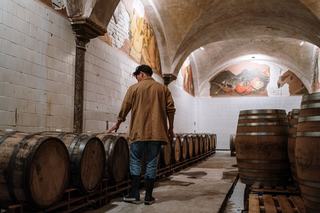
This history of Languedoc wine is easy to see on the ground: the Cistercian abbey of Valmagne, near Villeveyrac, still runs its own vineyard, and the Fontfroide abbey near Narbonne produces wine and welcomes visitors to its cloister and rose garden.
Food and wine pairings worth planning a meal around
Food and wine pairings in the Languedoc follow the land. The oysters of Bouzigues and the tielle of Sète, a spicy octopus pie, call for Picpoul de Pinet. Cassoulet from Castelnaudary or Carcassonne suits a Minervois or Corbières red with enough acidity to cut through the duck and sausage. Around the Cevennes foothills and the Larzac, goat's cheese and Pélardon pair with fresh whites, while a glass of Banyuls or Maury is the classic match for a chocolate dessert.
Markets in Pézenas, Uzès and Céret, and the halles of Narbonne, make it easy to assemble a picnic before an afternoon of tastings. A few wineries offer lunch with their wines in summer, often on booking, and the local cuisine of the Catalan coast, with anchovies from Collioure and grilled fish, gives a reason to stay longer in Roussillon.
A slower angle: following the Canal du Midi between cellars
The Canal du Midi offers a way of visiting the Languedoc vineyards that few itineraries describe: travelling at walking pace between cellars instead of driving from one appointment to the next. The towpath between Carcassonne, Homps, Capestang and Béziers is flat and largely shaded by plane trees, and many wineries in Minervois and Saint-Chinian lie within a short ride of the water, so the canal itself becomes the road between tastings.
Renting a boat for a few days, or cycling a section with luggage transported ahead, turns the trip into a series of short stops: a morning tasting near a lock, a lunch in a canal-side village, a second cellar in the afternoon. Wine bought along the way travels on the boat or in the support vehicle, and evenings can be spent in a château stay or gîte, as described in the guide to château stays and gîtes among the vines.
Booking, timing and getting around the Languedoc vineyards
When is the best time to visit?
Spring, from April to June, and September after the main harvest are the most pleasant months to visit the Languedoc vineyards. July and August are very hot and busy on the coast, while some small estates close or reduce opening hours during the harvest itself.
Do you need to book cellar visits?
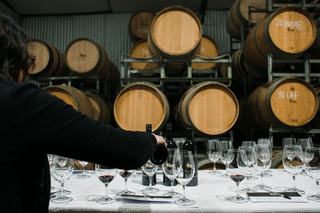
Booking is wise for larger wineries, guided cellar tours and anything involving a meal, and a call the day before is useful for small domaines. Many family cellars pour for free when you buy, while others charge, as explained in the overview of what French estates charge for a tasting.
How do you get around between estates?
A car gives the most freedom, as estates are spread across villages with limited public transport; trains reach Montpellier, Béziers, Narbonne, Carcassonne and Perpignan. Drivers should use the spittoon and know the drink-driving limit in France, or leave the wheel to a local guide or driver for the day.