Tipping on wine tours in France is never mandatory: French tour guides, drivers and winery staff earn a wage, and service is included in the wine tour price. Tipping culture differs from American expectations: a tip rewards exceptional service on a private wine tour, while a tasting calls for a bottle or the tasting fees.
On this page
- Is tipping expected in France?
- Do you tip wine tour guides?
- How much to tip on wine tours?
- What is the tipping etiquette for wine tastings?
- Are tips included in wine tour costs?
- Tipping the driver, the chauffeur and the taxi
- What to know about tipping in French restaurants?
- How French tipping compares with Italy, Spain and the rest of Europe
- What should I expect on a wine tour in France?
- Other ways to thank your guide or winemaker
- Common mistakes visitors make
- Questions visitors ask about tipping on wine tours
Is tipping expected in France?
Tipping in France is not expected the way it is in North America. The reason is structural rather than cultural politeness: French law requires that service staff receive at least the national minimum wage, and since 1985 restaurants and cafés must display prices with service included ("service compris"). The 15 % service charge that American visitors add at home is, in France, already built into the bill. A waiter, a tour guide or a driver does not depend on receiving tips to make a living.
That does not mean tipping is considered rude. It means that a tip carries a different message. In the United States, a tip is part of the price; in France, it is a gesture that says the level of service went beyond what you paid for. Leaving small change at a café, rounding up a taxi fare or handing a note to a guide who made your day are all perfectly acceptable, and they are appreciated. Leaving nothing after a good but standard service is also perfectly acceptable, and nobody will chase you down the street.
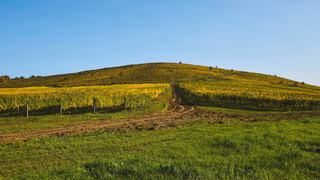
This logic applies to French wine tourism as a whole. Whether you explore Bordeaux, Burgundy, the Loire Valley or Provence, the default is simple: tipping is not expected, and a tip is a way to reward exceptional service. Travellers who come from countries with a strong tipping culture often feel uneasy with this. The best way to handle it is to understand who is paid how, and what each person on a wine tour in France actually expects.
Do you tip wine tour guides?
Tour guides are the one group on a French wine tour where a tip is most common, and even there it is optional. A guide employed by a tour operator receives a salary, and the price of your wine tour covers their time, their training and, often, their licence. Official tourist guides in France hold a professional card, and many wine tour guides have studied oenology or worked in the wine trade before guiding visitors.
Group tours with a tour operator
On a shared day wine tour from a city such as Bordeaux, Beaune, Reims or Avignon, where eight to fifteen travellers ride together in a minibus, tipping the guide is not expected. When a guide has been especially good, many visitors leave a small amount per person at the end of the day, handed over discreetly with a word of thanks. French and other European travellers on the same tour will often leave nothing, and the guide will not take it badly. There is no social cost to either choice.
Private wine tours
A private wine tour is a different experience: a guide dedicated to your group for a full day, often a custom itinerary, tastings arranged at estates that do not normally open to the public, lunch planned around the wines. Here a tip of around 5 to 10 % of the tour price is the most common practice among visitors who want to say thank you, and a guide who went out of their way (a rearranged schedule, a special cellar visit, a bottle tracked down for you) will be touched by it. Treat the percentage as an upper range, not a standard. A guided wine tour in France run by a small local company is often priced so that the guide is fairly paid without any tip at all.
How much to tip on wine tours?
How much to tip on wine tours in France depends less on the region than on the format of the visit and the quality of service you received. The following reading of French practice gathers what tour guides, drivers and winery staff describe when you ask them, and what most travel guides to France recommend. It is a guide to what is common, not a rule.
| Situation on a wine tour | Is a tip expected? | Common gesture if service was excellent |
|---|---|---|
| Free tasting at a family winery | No | Buy a bottle or two rather than tip |
| Paid tasting or cellar tour at a château | No | A warm thank-you, a review, a purchase |
| Shared group day wine tour | No | A small amount per person for the guide |
| Private wine tour with guide | Not expected, often given | Around 5 to 10 % of the tour price |
| Private driver (without guiding) | No | Rounding up, or a modest note at the end of the day |
| Lunch at a restaurant during the tour | No, service is included | Leaving small change or rounding the bill |
| Multi-day wine tour with the same guide | Not expected | One envelope at the end rather than a tip each day |
A worked example helps. Four friends book a private day wine tour in the Loire Valley: guide, minivan, three estates and lunch. The guide rebooks one tasting when a winery closes unexpectedly and finds a producer of old Chenin who opens a white wine from the family cellar. At the end of the day, the group decides to tip 5 % of the tour price, shared between the four of them, and hands it over in cash with a thank-you. Had the day been pleasant but standard, the same group could have left nothing, or rounded up, without anyone considering it rude.
Two practical points matter more than the exact amount. First, cash is the easiest way to tip: card terminals in France rarely offer a tip line, and adding a tip on a credit card at a winery shop can be awkward for the staff. Second, a tip should go to the person who gave you the service. If you booked through a large tour operator, ask whether the guide and driver are the same person, and hand each their share.
What is the tipping etiquette for wine tastings?
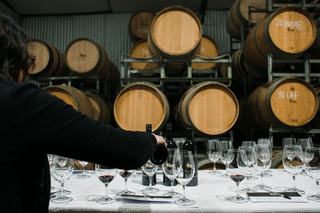
At a French winery, tipping is not expected, and it can even be a little confusing for the person who pours. In many estates, especially smaller family domaines in Burgundy, Alsace or the Rhône, the person pouring your wine is the winemaker, their partner or their child. Handing a tip to the owner of the estate is a bit like tipping a shopkeeper for selling you something: kindly meant, but out of place.
The gesture that French winery staff value is different. It is buying wine. A free tasting at a small estate is, in practice, a sales visit, and the unwritten etiquette is that visitors who taste several wines buy at least one bottle when they can. You are never obliged to, but leaving with nothing after an hour of attention from the winemaker is the one situation where French visitors themselves feel a little uncomfortable. If you cannot carry bottles, many estates ship, and a few will note your email address and send an offer later.
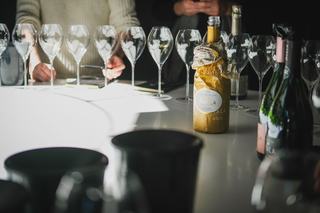
Paid tastings work more like a museum ticket. Larger châteaux in Bordeaux or Champagne houses in Reims and Épernay charge for tours and wine tastings, and the fee covers the service. There is no tip jar, and staff do not expect tips. A warm word, a review online or a mention to friends is the gesture that counts. For the booking side of these visits, the practical steps are the same whatever you plan to leave at the end: see how to book a visit at a French estate.
- Small family winery, free tasting: no tip; buying a bottle is the thank-you.
- Paid tasting at a large estate: no tip; the tasting fee is the price of the service.
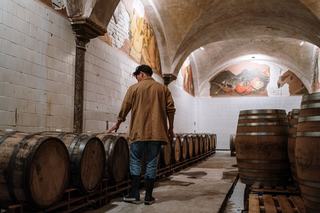
- Exceptional service from a cellar guide at a château: a small tip is appreciated, never expected.
- Tasting in a wine bar or a city wine shop: treat it like a café, and round up if you want.
Are tips included in wine tour costs?
In most cases, yes, in the French sense: the price of a wine tour includes the service. When you book a day wine tour, the quoted price covers the guide's time, transport, the tasting fees at the estates visited and, when stated, lunch. The tour operator pays its staff a salary, with social contributions, and nobody is working for tips alone.
A few details are worth checking when you read what is included:
- Tasting fees: included on almost all organised wine tours in France; if they are not, the tour description says so.
- Lunch: sometimes included, sometimes left to you at a restaurant chosen by the guide; drinks at lunch are often extra.
- Gratuities: some operators that mainly sell to American visitors mention "gratuities not included" in their terms. This is a marketing habit borrowed from the US, not a French rule, and it does not change the fact that the guide is paid a salary.
- Hotel pick-up: included in city tours, often extra when your hotel is outside the city centre.
Some international travel agencies selling wine tours in France, Italy and Spain add a "service charge" line to their invoice. Read what it covers: it may be a booking fee kept by the agency, not a tip that reaches the guide. If you want the guide to receive something, give it directly.
Tipping the driver, the chauffeur and the taxi
Wine tourism in France involves a lot of driving, and the question of who drives matters, because the legal drink-driving limit is low and tastings add up quickly. Many travellers therefore hire a driver, book a chauffeur for the day or take taxis between estates.
Taxi drivers in France do not expect tips. Rounding up to the nearest euro, or leaving small change, is common and appreciated, especially if the driver helped with your bags, or with the bottles you bought at the winery. A private driver hired for a full day of wine tours is closer to a guide: if the driver waited patiently, adapted the route and carried your cases of wine to the hotel, a modest note at the end of the day is a kind gesture. If the driver also guided you through the vineyards, treat them as a guide.
Ride services and apps work the same way: the app may offer a tip option, and French drivers are perfectly happy if you skip it. Nobody will rate you down.
What to know about tipping in French restaurants?
Most wine tours in France include a lunch, and many travellers extend the tour with a dinner at a restaurant near the vineyard. French restaurants follow the same rule: service is included in the prices printed on the menu. The bill says "service compris", and restaurant staff are paid a wage that does not depend on tips.
The common practice is to leave small change after a coffee, to round up the bill after a simple meal, and to leave a little more at a fine restaurant when the service was exceptional, for example when the sommelier guided you through a food and wine pairing that made the evening. In practice, a tip in a French restaurant is well below what visitors from the US leave at home, and many French diners leave nothing after a standard service. When paying by credit card, say how much you want to add before the waiter types the amount, or leave cash on the table.
Food and wine are part of the same experience in France, and restaurants in wine regions are often run by people close to the local winemakers. If you want to go further in pairing local dishes with local wines, our pages on French wine and gastronomy explain what each region puts on the table.
How French tipping compares with Italy, Spain and the rest of Europe
Travellers who combine a wine tour in France with a trip to Italy or Spain often ask whether the rules change at the border. Broadly, they do not. Across much of Europe, service staff are paid a wage, tipping is a gesture rather than a duty, and restaurants include service in their prices, or add a clearly labelled cover or service charge.
- France: service included by law; tipping is not expected; small tips for exceptional service.
- Italy: a "coperto" (cover charge) often appears on the bill; tipping is modest, and wine tour guides in Tuscany or Piedmont are tipped much as in France.
- Spain: tips are small and optional; rounding up at a bar is the usual practice, and a guide on a Rioja wine tour receives a tip only for excellent service.
- Portugal: similar to Spain, with a small tip common in the Douro Valley for a private guide.
The one European difference that surprises visitors is scale: a tip in Europe is modest. What is generous in France would be ordinary in the US, and what is standard in the US can feel excessive to a French guide. Neither is wrong; the local practice is simply lower.
What should I expect on a wine tour in France?
Knowing what a wine tour in France looks like helps you judge what counts as standard service and what counts as exceptional. A typical day wine tour follows a pattern: pick-up in the morning from your hotel or a meeting point in the city, a drive through the vineyards, two or three winery visits with a cellar tour and wine tastings, a lunch, and a return in the late afternoon.
At each estate, you will usually taste three to six wines, often starting with a white wine or a rosé in Provence, then reds, sometimes a sweet wine to finish. The person pouring will explain the grape, the soil, the vintage and how the wine is made. In small estates, the visit can be very personal, and the winemaker may open a bottle that is not on the tasting list. That is the kind of moment that separates a standard service from an exceptional one.
A few features of French wine tourism are worth knowing in advance, because they shape what you will want to thank people for:
- Most family wineries close at lunchtime, often between noon and two, and on Sundays; a good guide plans around this.
- Harvest time, from late August to October, is the busiest season: some estates close to visitors, and a guide who still gets you in has done real work.
- Tastings are meant to be spat as well as swallowed; spitting is perfectly acceptable, and nobody will find it rude.
- Visits are usually in French and English; a guide who translates a long conversation with a winemaker is providing a service beyond the price.
If you are planning your first visit from the capital, a day trip from Paris to the vineyards is the easiest way to see how French estates welcome visitors before committing to a longer trip in the wine regions.
Other ways to thank your guide or winemaker
Because tipping is not expected in France, the gestures that French guides and winemakers value most are often not money at all. These are the forms of thanks that come up most often when you ask the people who work in wine tourism.
- Buying wine: the most direct thank-you to an estate, and the one that keeps small wineries alive.
- A written review: a detailed review online, naming the guide, helps a small tour operator far more than visitors realise, since word of mouth decides who books the next day wine tour.
- A recommendation: telling friends, or sharing the name of the estate, is valued by winemakers who do not advertise.
- Time and interest: asking questions, tasting carefully and showing curiosity about the grape and the region is the gesture that French winemakers mention first.
- A thank-you email: a short message after your trip, sent to the address of the tour operator, is often forwarded to the guide and read with pleasure.
These gestures are not a substitute for a tip when you feel one is deserved, and they are not a way to avoid paying. They are simply the local form of gratitude, and they are appreciated by every guide and every winery, whether or not money changes hands.
Common mistakes visitors make
A few mistakes come up again and again in travel forums, and each is easy to avoid once you understand how service works in France.
The first is tipping at the percentage used at home. Leaving 20 % after a group tour or at a restaurant is not rude, but it signals that you do not know the local practice, and it can make staff uncomfortable. The second is tipping the owner of a small estate, as described above: buy a bottle instead. The third is assuming that a "service charge" on an agency invoice reaches the guide; it often does not.
The fourth mistake is the opposite one: feeling that you must tip every person you meet during a wine tour, from the cellar hand to the shop assistant, and spending the day worrying about it. Tipping is not expected in France, and the quality of service does not depend on it. Enjoy the wine, the vineyards and the food, and keep a tip for the person who made the day exceptional.
Questions visitors ask about tipping on wine tours
Is it rude not to tip on a wine tour in France?
No. Tipping is not expected in France because guides, drivers and winery staff are paid a salary, and service is included in the price of the tour. Leaving nothing after a standard service is common and is not considered rude.
Should I tip the winemaker at a free tasting?
Usually not. At a family estate, the person pouring is often the owner, and buying a bottle is the expected thank-you. A tip is out of place there, although kindly meant.
How much do people tip a private wine tour guide in France?
Visitors who choose to tip a private guide for exceptional service commonly give around 5 to 10 % of the tour price. It remains optional, and a heartfelt thank-you or a detailed review is also appreciated.
Can I tip by credit card?
It is possible, but card terminals in France rarely offer a tip line, so cash is simpler. At a restaurant, tell the waiter the total you want to pay before the amount is entered on the terminal.