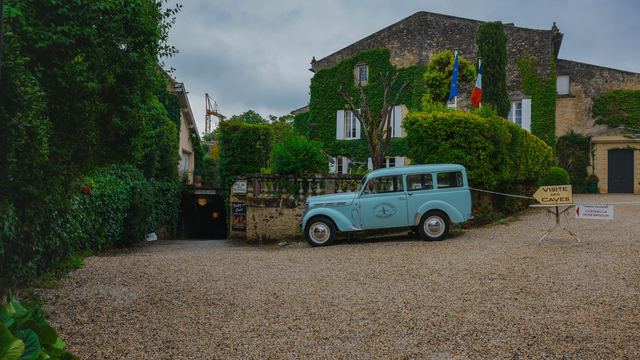
Yes: a Saint Emilion day trip from Bordeaux is worth it. The UNESCO World Heritage medieval village, its monolithic church, a guided tour of a wine chateau and a second tasting fit between a morning train and an evening return. Visiting Saint Emilion also leaves time to discover the vineyard landscape and enjoy a long lunch.
Saint-Émilion sits about 40 km east of the city, on the right bank of the Dordogne. The village itself needs half a day; the other half belongs to the wine estates around it. Without a car, the train works for the village but not for the chateaux, so a guided tour or a bike is the practical answer for tasting.
On this page
- Why Saint-Émilion earns a full day from Bordeaux
- How to get from Bordeaux to Saint Emilion
- What to do in Saint Emilion village
- Which chateau visits fit into one day?
- A day trip itinerary that works
- What to expect on a Saint Emilion wine tour
- Where to eat and drink in Saint-Émilion
- When a day is not enough
- Saint Emilion day trip: the questions travellers ask before booking
Why Saint-Émilion earns a full day from Bordeaux
Most visitors to Bordeaux have one or two free days for wine country, and the choice usually comes down to the Médoc (Margaux, Pauillac) or Saint-Émilion. The Médoc is a string of grand chateaux along a flat road; Saint-Émilion is a town. That difference decides the day. In the Médoc you move from estate to estate by car and see little else; in Saint-Émilion you can walk a medieval village of honey-coloured stone, go underground into a church carved from the rock, climb a bell tower and then visit a chateau a few minutes from the centre.
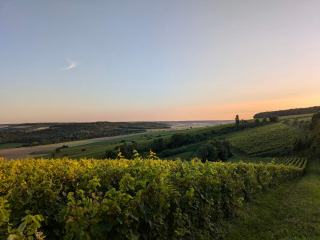
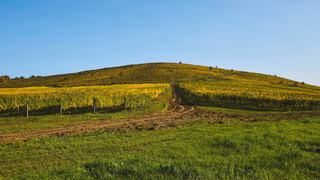
The village and the vineyard landscape around it were inscribed on the UNESCO World Heritage list in 1999 as the Jurisdiction of Saint-Émilion, the first wine landscape to receive that status. The listing covers eight communes, not just the town, which is why the views from the ramparts matter as much as the monuments: the vineyard runs right up to the walls. For a first visit to the Bordeaux wine region, few places show so clearly how wine production, heritage and daily life fit together. The cultural value is exceptional, and the history of winemaking here goes back to Roman times, when vines were already planted on the limestone plateau.
Is it too small for a whole day? The historic centre can be crossed on foot in fifteen minutes, but the steep lanes (called tertres), the underground monuments and the tastings stretch a visit easily from ten in the morning to six in the evening. Anyone who only wants to see the village can do it in half a day; anyone who wants to discover the wines needs the full day, and some will want to stay a night. For an overview of the other areas you could visit instead, our guide to the vineyards of the Bordeaux region and how they differ compares the left bank, the right bank and Entre-Deux-Mers.
How to get from Bordeaux to Saint Emilion
There are four realistic ways to travel from Bordeaux to Saint Emilion, and the right one depends on how much wine tasting you plan and whether someone in the group is willing not to drink.
Saint Emilion by train
Regional TER trains leave Bordeaux Saint-Jean station for Saint-Émilion several times a day, and the journey takes roughly 35 to 40 minutes, sometimes with a change at Libourne depending on the timetable. Services are not frequent, so check dates and return times on the SNCF site the day before; missing the last train in the evening means a taxi from Libourne. The train station is a small halt in the vineyard below the town, about 1.5 km away: a walk of 20 to 25 minutes uphill through the vines, pleasant in the morning, less so in July heat. Some visitors take the train to Libourne instead, which has more departures, and continue by bus or taxi for the last few kilometres.
By car, and the question of drinking
By car the drive takes about 45 minutes to an hour, depending on traffic leaving the city. The car park options below the village fill up by late morning in summer, so arriving early helps. The car is the most flexible way to reach the chateaux, but French limits are strict and tastings add up fast; read the drink driving limit in France for wine tourists before you plan who drives. Spitting at tastings is normal and nobody will take offence. We recommend booking every estate by email a few days ahead with the details of your group, and asking each winery for its exact location: some are signposted only from a small road.
Guided tours and electric bikes
A guided day tour departing from Bordeaux is the simplest option if tasting is the priority: pick-up in the city in the morning, two or three wineries, lunch, free time in the village and a drop-off in the evening. Small-group minibuses and private tours with a driver both exist; a private tour lets you choose the estates. The other option popular with visitors is an electric bike rented in the village or at Libourne: the slopes around the town are real, and an electric bike turns them into a gentle ride between chateaux. Book in advance from April to October, when demand is highest.
What to do in Saint Emilion village
The village is best seen on foot, starting from the tourist office next to the bell tower, which is also where the underground visits are booked. Here are the places that justify the trip.
- The monolithic church. Carved out of the limestone hillside between the 11th and 12th centuries, it is one of the largest underground churches in Europe. It can only be visited with a guided tour run by the tourist office (the Office de Tourisme), which also takes in the hermitage of Saint Émilion, the catacombs and the Trinity chapel. Tours fill up in summer: book a time slot on arrival, or online the day before.
- The bell tower. Rising above the monolithic church, it offers the classic view over the roofs and the vineyard. The key and ticket come from the tourist office, and the climb is short but steep.
- The collegiate church and its cloister. Above the village, the collegiate church mixes Romanesque and Gothic parts; its cloister is a quiet stop between two tastings.
- The Cordeliers cloister. The ruined cloister of a Franciscan convent now houses a producer of sparkling wine, whose cellars run under the town. A glass of sparkling wine in the cloister garden is one of the easiest pleasures of the day, and a step away from the busiest lanes.
- The Tour du Roy. A 13th century keep at the edge of the medieval town, with a panorama over the Dordogne valley from the top.
- The lanes and ramparts. The Tertre de la Tente, the Porte de la Cadène and the walls give the medieval village its character; wear flat shoes, the stones are polished and steep.
Two anecdotes add context during a walking tour. The town takes its name from Émilion, a Breton monk said to have lived as a hermit in a cave here in the 8th century. And during the French Revolution, the underground quarries and grottoes hid Girondin deputies on the run from Paris. The history of Saint Emilion is literally underneath your feet: the limestone quarried to build the city of Bordeaux left kilometres of galleries under the town and the vineyard.
Which chateau visits fit into one day?
Saint-Émilion counts hundreds of wine estates, from the Premiers Grands Crus Classés to small family properties. The appellations are Saint-Émilion and Saint-Émilion Grand Cru, and the classification of the grand cru wines is revised roughly every ten years. For a day trip, the classification matters less than the kind of visit each chateau offers.
Plan on two chateau visits, three at most. Each visit with tasting lasts 60 to 90 minutes, travel between estates takes 10 to 20 minutes, and lunch in the region is never quick. More than three visits turns the afternoon into a rush and the wines into a blur; the reasoning behind that limit is explained in how many winery visits per day you can really enjoy.
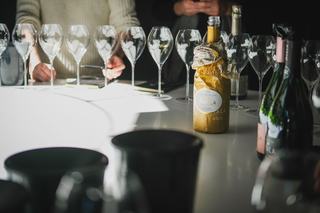
A good mix for a first visit: one large, well-known estate, where the tour covers the vineyard, the vat room and the barrel cellar, and one family property where the owner often leads the tasting. Many estates close on Sundays and on public holidays outside summer, and almost all ask visitors to book. Some well-known houses offer workshops (blending, food pairing) or a behind-the-scenes format sometimes called envers du décor, which shows the working side of winemaking. Tasting fees vary widely from one chateau to another; the booking page of each estate gives them, and what French wineries charge for a tasting explains what the fee usually includes. We highly recommend at least one visit where the winemaking team explains the step from grape to barrel: it is the most memorable part of the day for many people, from June to the harvest.
Pomerol, a few minutes north-west, is worth a detour even without a visit: the appellation is tiny and its famous estates rarely open, but driving or cycling through its landscape shows a completely different scale from the Médoc chateaux. On the way, the restaurant Terrasse Rouge, with its view over the vines near Pomerol, is a popular lunch stop.
A day trip itinerary that works
This timetable assumes a departure from Bordeaux around 9 am, by car, guided tour or an early train, and a return in the early evening.
- 9:00 to 10:00: travel to Saint-Émilion. By train, allow extra minutes for the walk up from the station.
- 10:00 to 12:00: tourist office, guided tour of the monolithic church and the underground monuments, then the bell tower and a walk through the lanes.
- 12:30 to 14:00: lunch in the village or at an estate restaurant.
- 14:30 to 18:00: two chateau visits with tasting, by car, bike or with the tour guide, then a last glass at the Cordeliers cloister if time allows.
- 18:00 onwards: return to the city of Bordeaux, or stay for dinner and sunset over the vineyard if you drive or if the train schedule allows it.
The order can be reversed: chateaux in the morning, village in the afternoon, when the light on the stone is at its best and the day tour groups have left. In September and early October, during the harvest, estates are busier and some limit visits, but the vineyard is at its most lively.
What to expect on a Saint Emilion wine tour
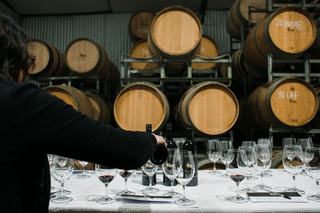
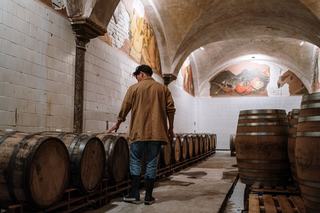
A typical wine tour in Saint Emilion starts in the vines, where the guide explains the soils (limestone plateau, clay slopes, sand and gravel towards Pomerol) and why Merlot dominates the right bank while Cabernet Sauvignon leads on the left bank around Margaux. The visit then moves to the vat room and the barrel cellar, often dug into the limestone, before a tasting of two or three wines, sometimes including a second wine or an older vintage.
On a group tour departing from Bordeaux, the estates are chosen in advance and the timing is fixed; on a private tour, you can ask for a particular style or a specific chateau. Either way, expect explanations in English, questions welcome, and no obligation to buy. If a bottle tempts you, shipping or carrying wine home is possible; estates are used to foreign visitors and will advise on packing.
Where to eat and drink in Saint-Émilion
Lunch is part of the experience. The village has bistros on its squares, wine bars where you can taste by the glass from several estates, and a few restaurants with a terrace over the rooftops. Several chateaux around the town run their own restaurant with a view over the vines, which avoids driving back to the centre between two visits. Reservations are strongly recommended at weekends and from July to September. The local sweet is the macaron of Saint-Émilion, a flat almond biscuit made to a recipe attributed to the Ursuline nuns; it travels well and makes a better souvenir than most.
Two practical points: many restaurants stop serving lunch around 14:00, and some close one or two days a week outside high season, so check before relying on a specific place. For a picnic, the village has a few delicatessens and the vineyard paths offer plenty of spots, as long as you stay off private plots.
When a day is not enough
A single day covers the village and two estates. It does not cover the satellite appellations (Montagne, Lussac, Puisseguin), Pomerol and Fronsac, or a sunset over the vineyard followed by dinner. If you want those, stay one night in the town or in a chateau guest room: the evening, when day visitors have left, is the calmest time in Saint-Émilion, and the next morning you can visit an estate before driving on to the Dordogne or back to Bordeaux. Rooms in and around the village are limited, from a small hotel in the centre to guest rooms on a working estate, and book up early in summer and during harvest weekends. A night there is the easy way to explore the red wine appellations of the right bank at a slower pace, and many travellers coming from Paris by train choose it for a unique weekend in this region of France.
The other case where a day is not enough is the visitor who wants to see several wine regions: combining Saint-Émilion and the Médoc in the same day is possible on some tours, but it means little time in each place. Two separate days, one on each bank, give a far better picture of Bordeaux wine than one rushed loop.
Saint Emilion day trip: the questions travellers ask before booking
Can you visit Saint Emilion without a car?
You can visit the village without a car by taking the train from Bordeaux and walking up from the station. Reaching the chateaux is harder: a guided tour, a taxi from Libourne or an electric bike rented locally is needed for the estates outside the town.
Do you need to book the monolithic church?
The monolithic church can only be seen with a guided tour organised by the tourist office. In high season, booking a slot on arrival or the day before is the safest way to get a place at the time you want.
What is the best time of year for a Saint Emilion day trip?
Late April to June and September to October offer mild weather and open estates. July and August are busy and hot; the harvest in September and October is lively but some chateaux limit visits, and many estates close in winter or on Sundays.
How long does the train from Bordeaux to Saint Emilion take?
The TER from Bordeaux Saint-Jean takes about 35 to 40 minutes, sometimes with a change at Libourne. Trains are not frequent, so check the return times before leaving.